All posts

The fate of wave drifters in the Gulf Stream

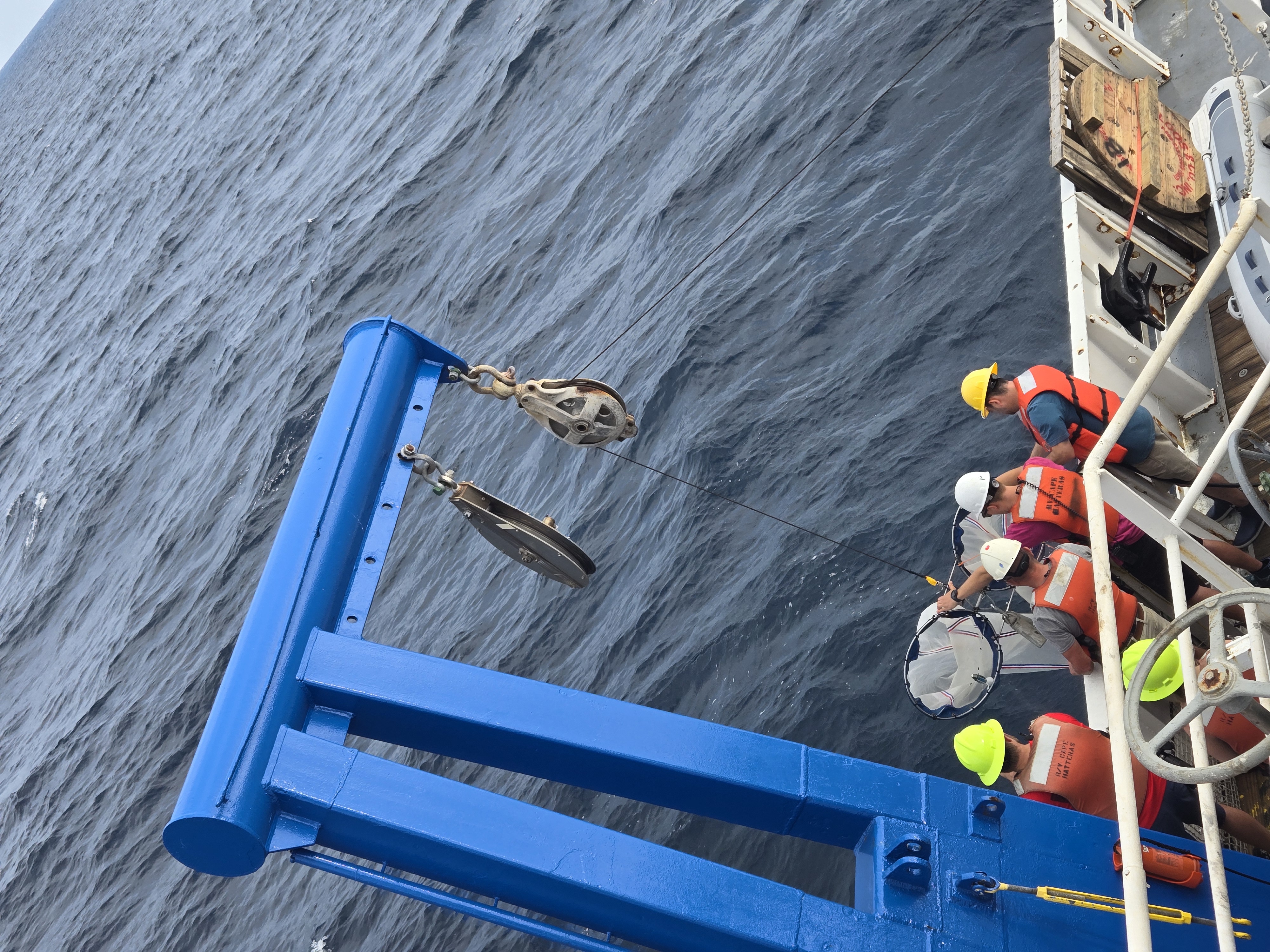
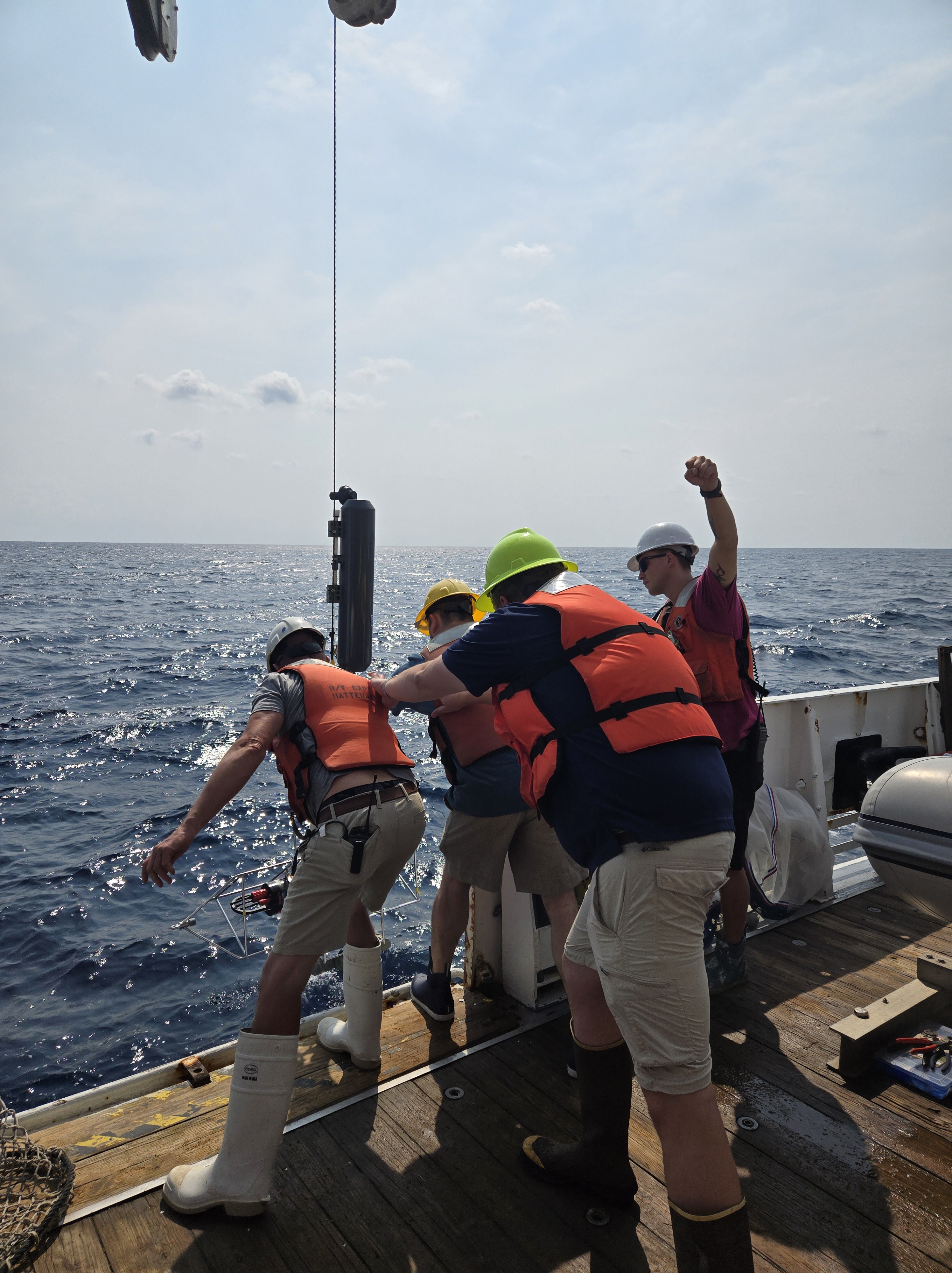
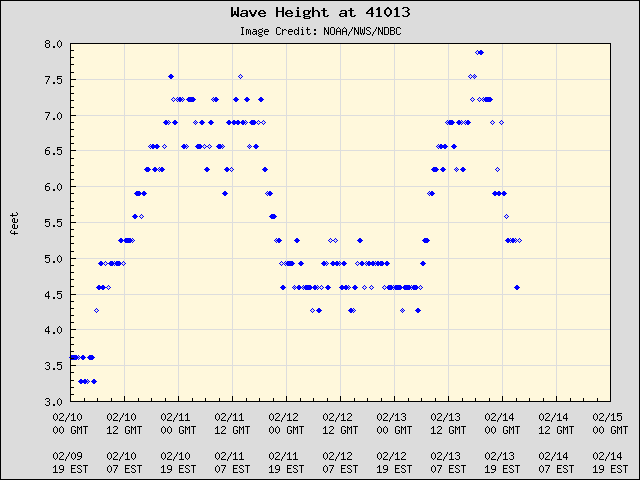
I have been periodically checking in on the pairs of wave drifters we deployed during TEAL3. Although the wave data and other parameters collected as Hurricane Erin passed by 2 weeks ago will be an interesting story itself (8 m waves offshore!), here are just a few snapshots of the buoy drifts released from our four offshore stations. At each station, we deployed a pair of drifters (magenta diamonds) that remain close together for the first couple of days after release. They begin to have noticeable separation after about 7 days. The Gulf Stream influence is remarkable as the station 5C and and 5B drifters are essentially in the North Atlantic over a 2 week drift. The “inshore” pair, released at station 4 (600 m water depth) have turned into Long Bay and are floating at around the ~30 m isobath. The offshore pair, released at station 6 (1400 m water depth) are basically still around the latitude of Wilmington and are still a pair! I will be very curious to see the fate of these drifters as time moves on. Special shout-out to Dr. Martha Schonau and the SIO Lagrangian Drifter Laboratory for sending these to us. I hope to do more releases of this kind.

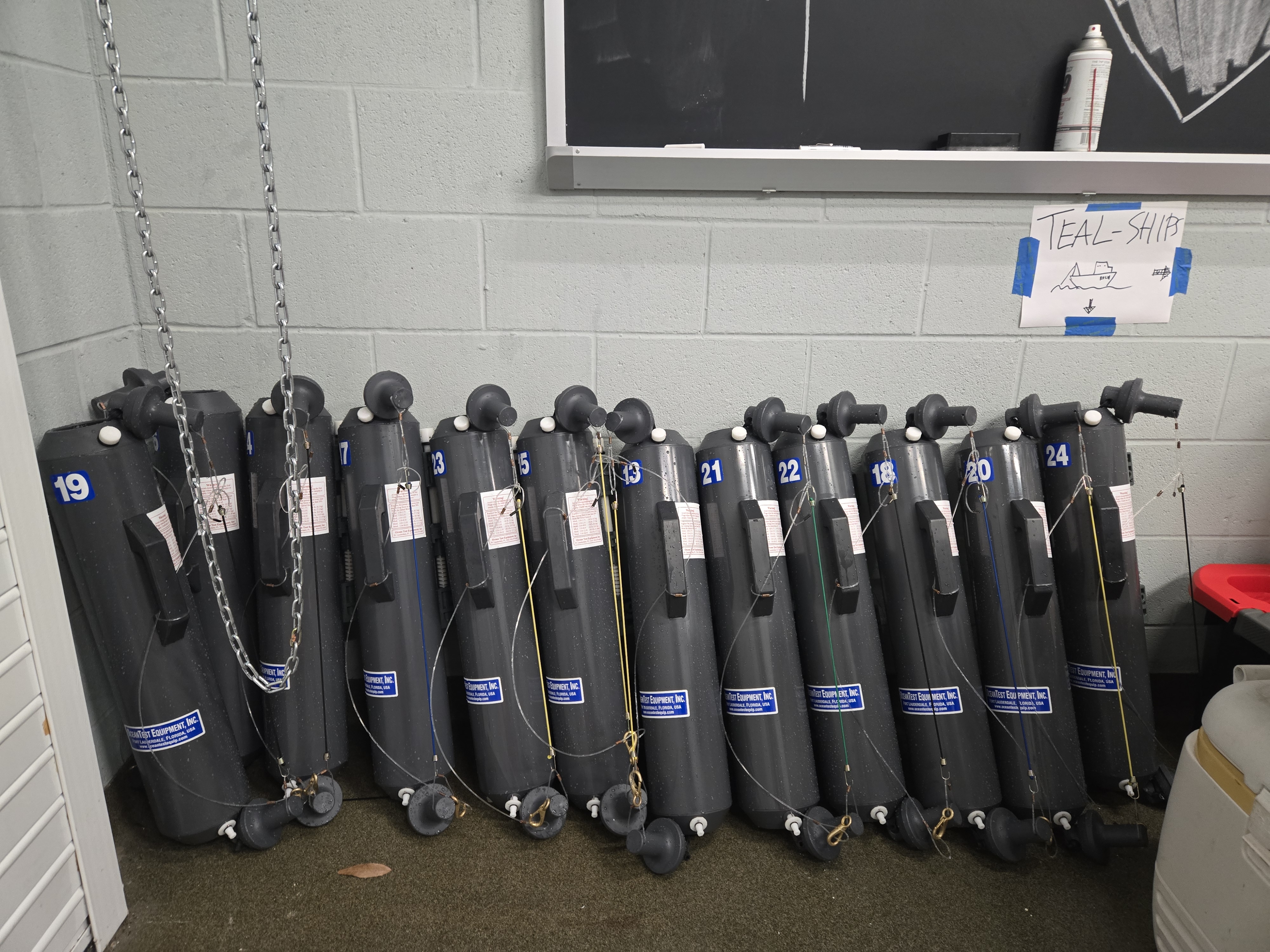
TEAL-SHIPS 3rd time is the charm!

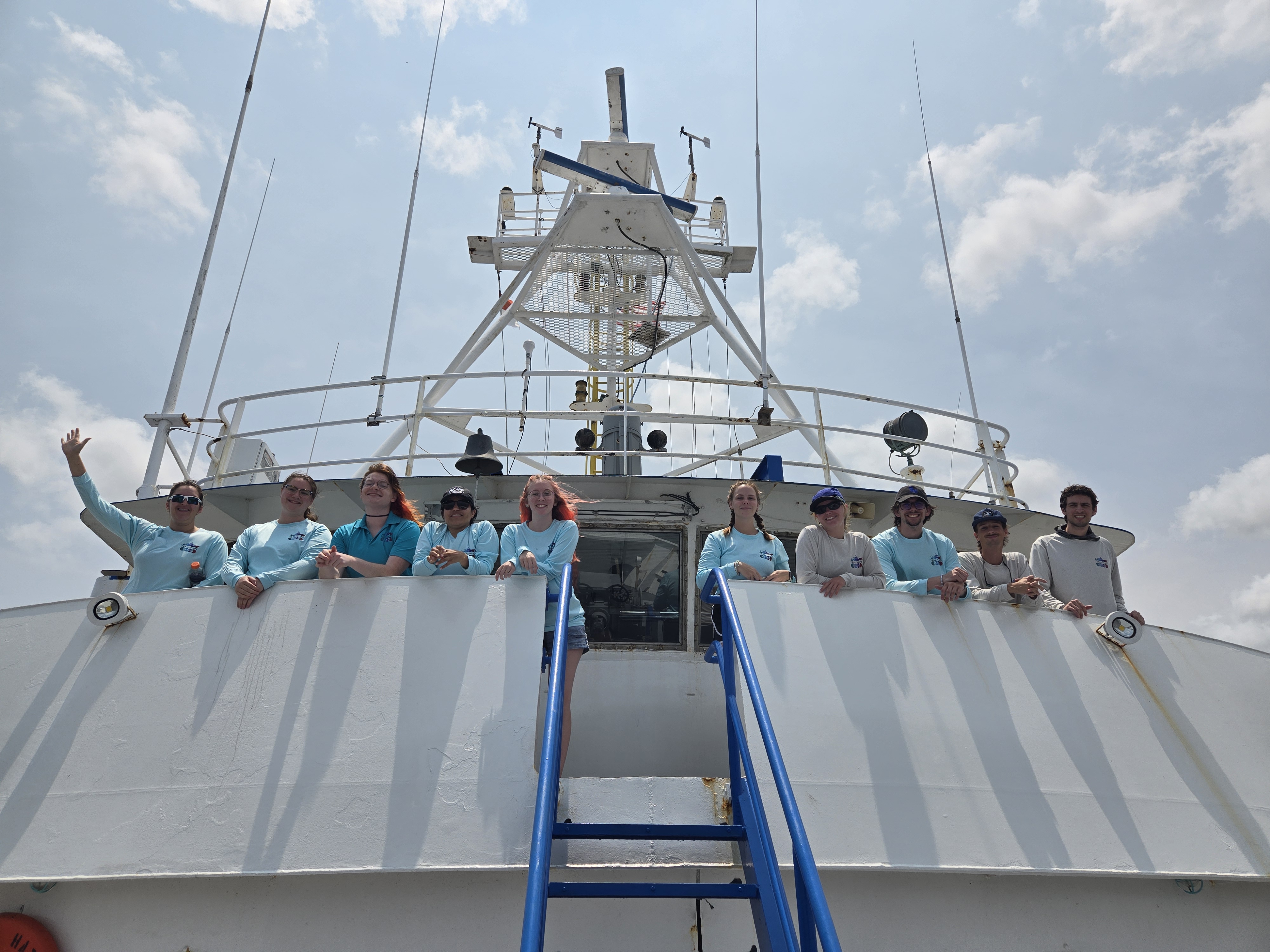
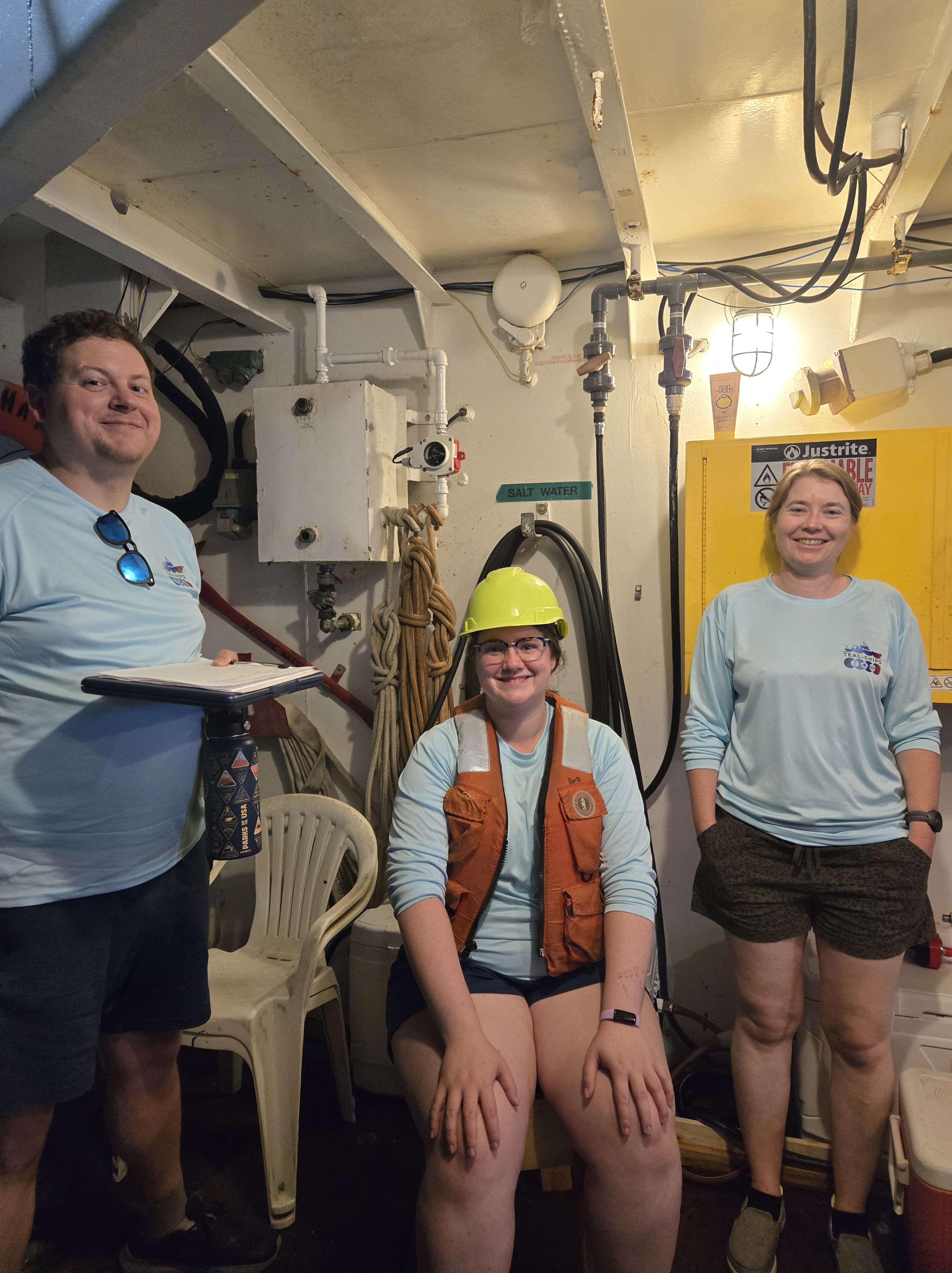
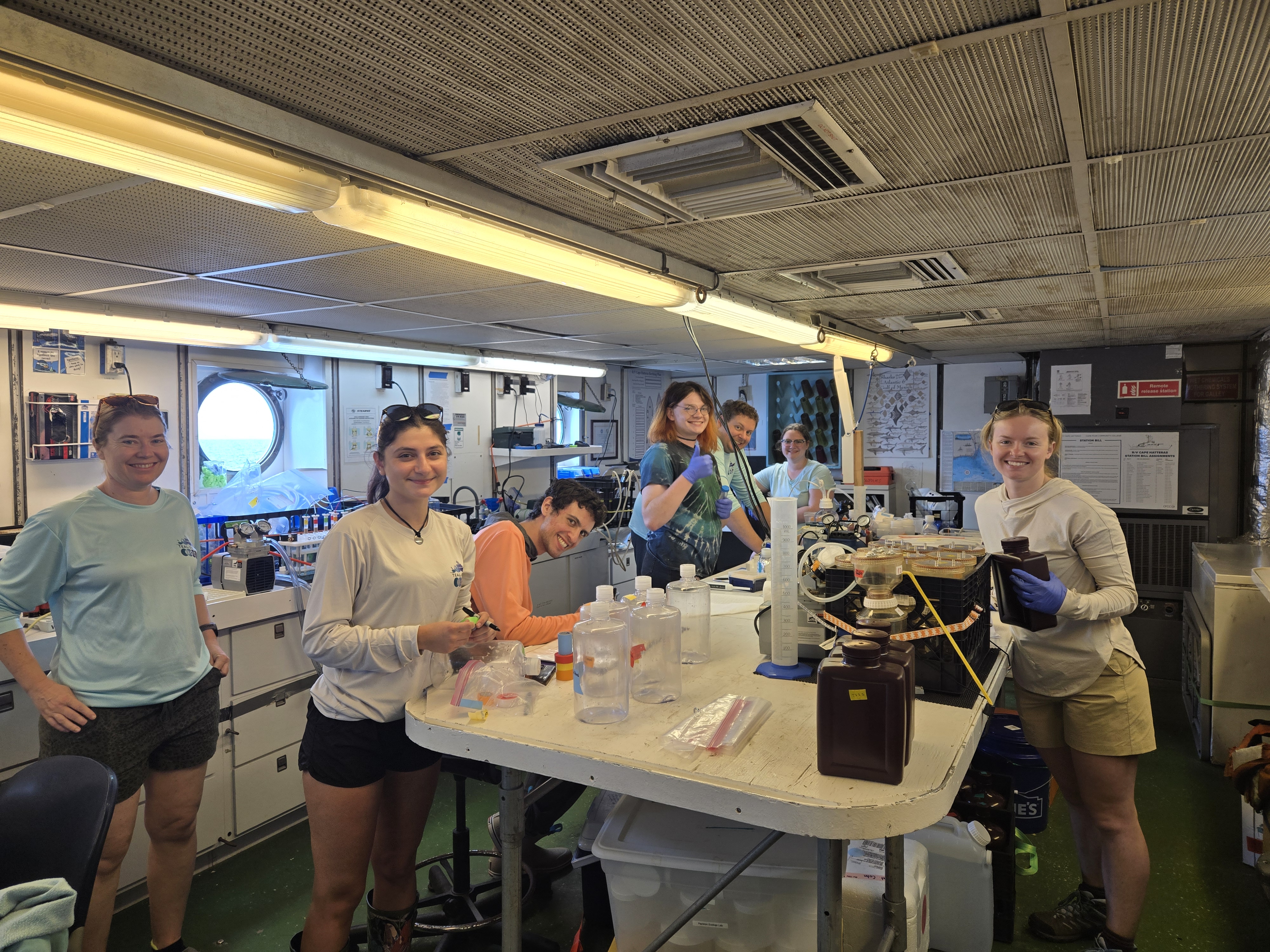
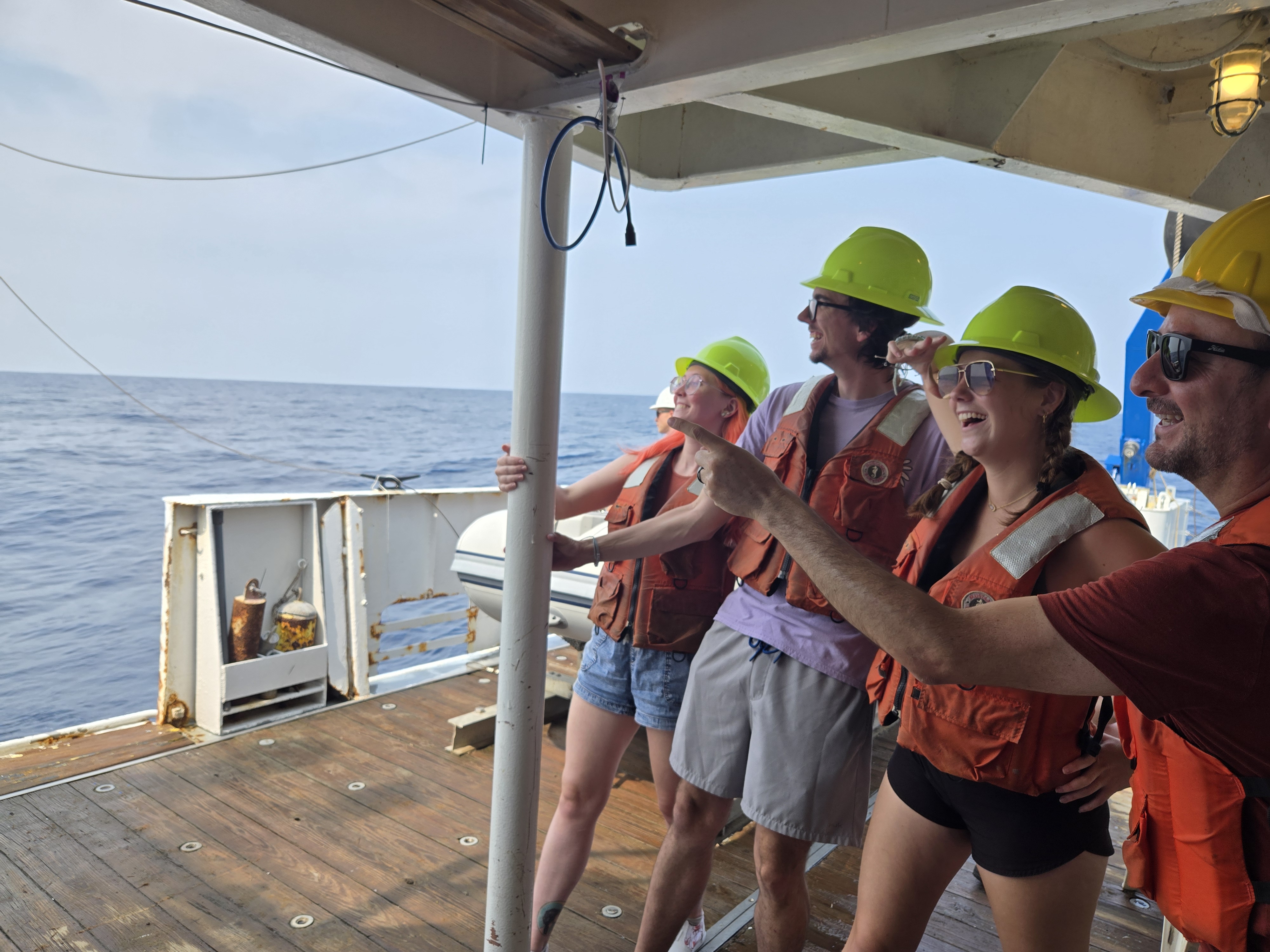
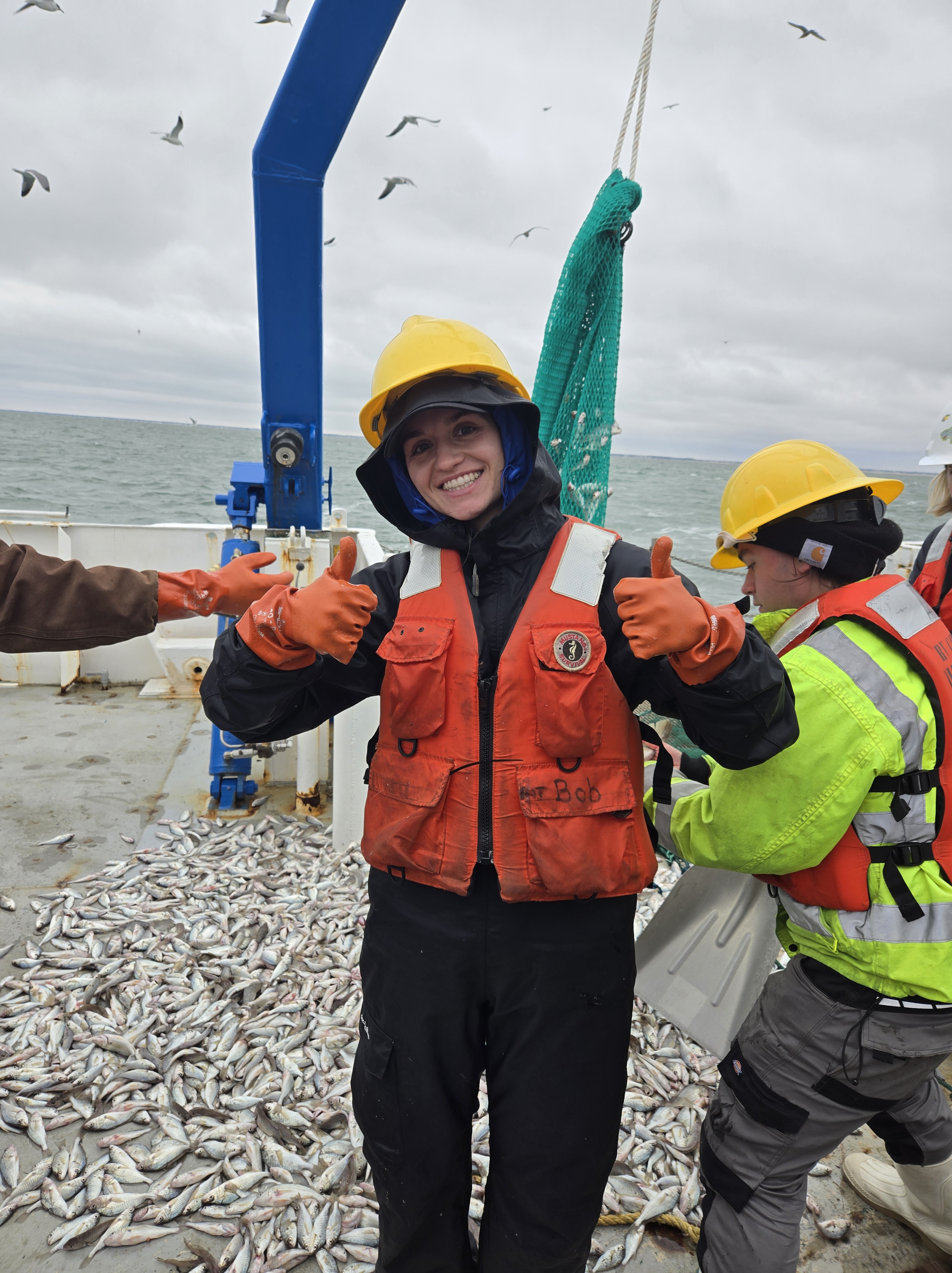
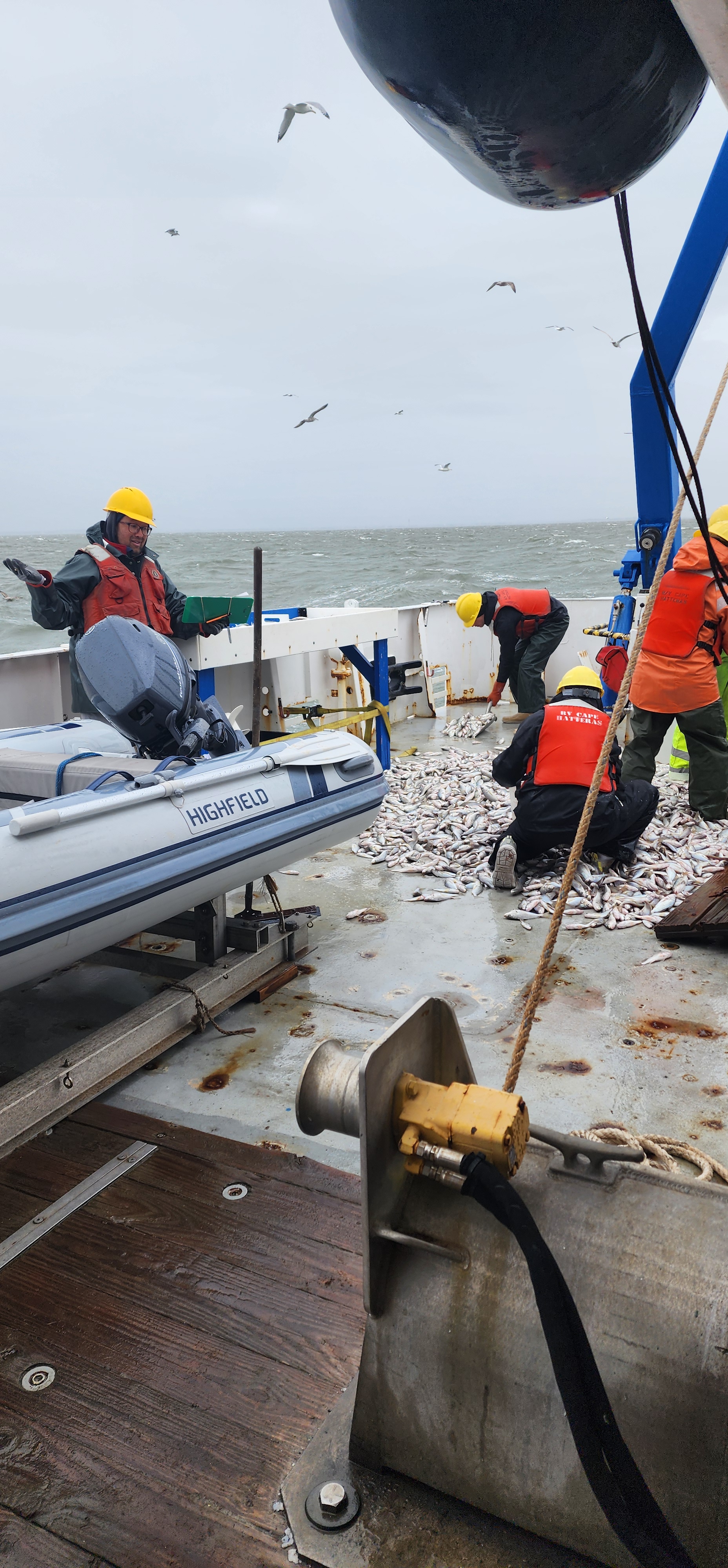
Our third TEAL-SHIPS cruise on RV Cape Hatteras concluded this weekend. We finally completed all of our stations with terrific collaboration and hard work by all parties (no surprise there!). Some memorable aspects of this cruise include: drifter deployments courtesy of the Lagrangian Drifter Laboratory at SIO, on-board Winkler titrations, space creature shrimp trawls, and out-running the rain bands. Until next time, Gulf Stream!

Sensor integration attempted

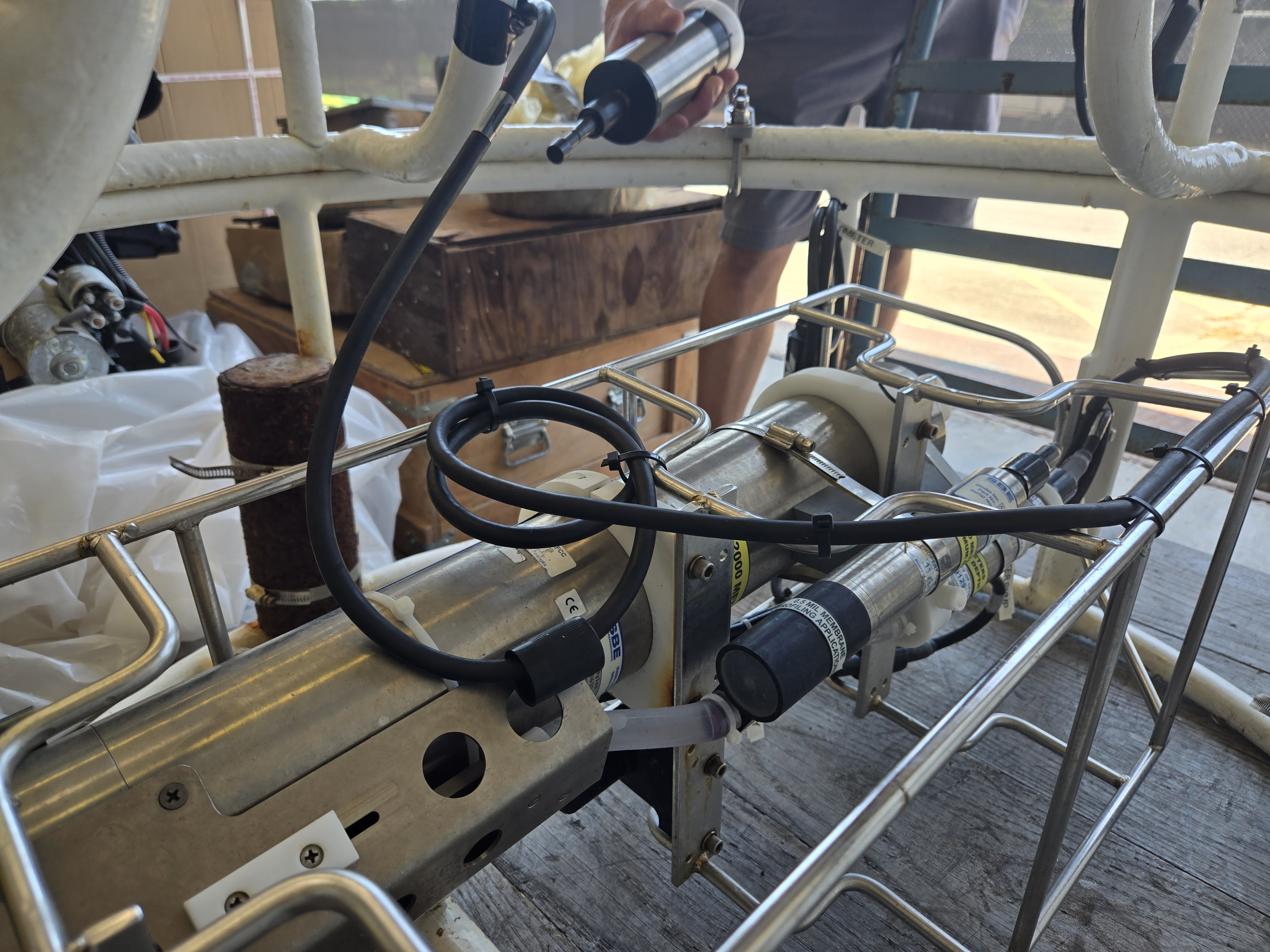
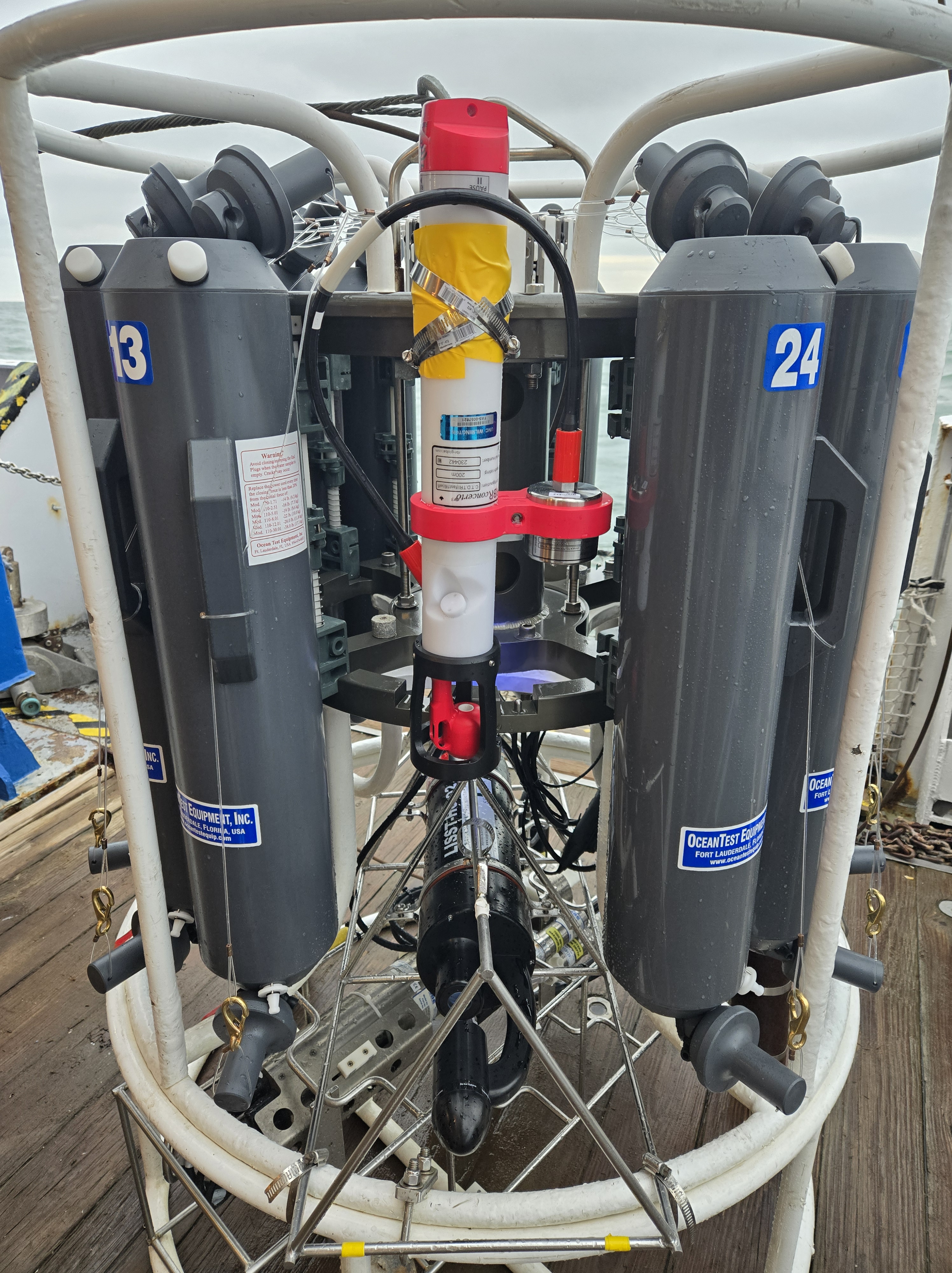
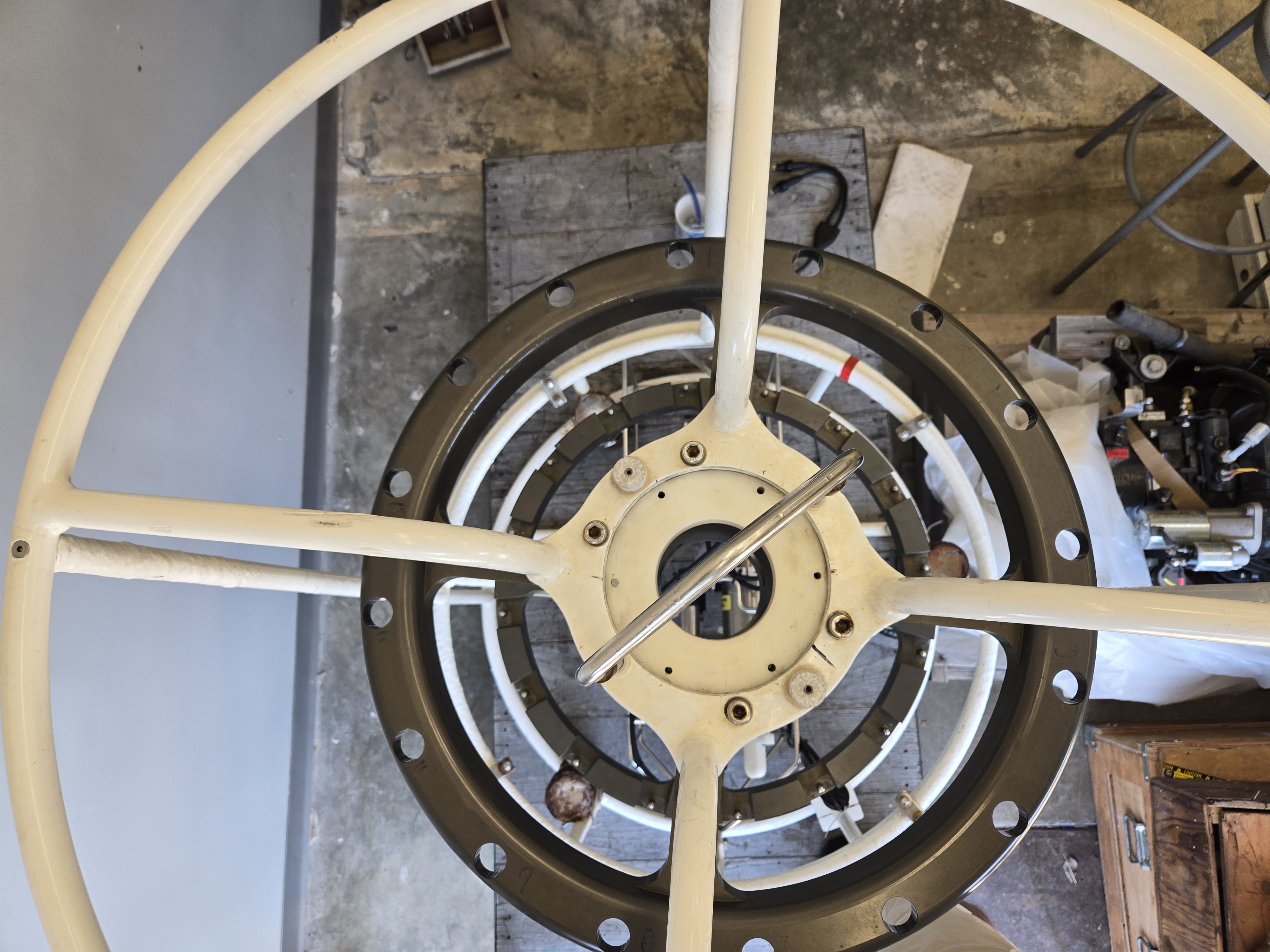
A rosette water sampler is an essential piece of oceanographic equipment. It allows real-time controlled water collection at specific depths and/or water class targets. It is also a very cool piece of engineering. Yesterday, Dave Wells (UNCW) and Bill Davis (CFCC) helped us figure out where we can plug in an ECO chlorophyll-a fluorometer. This will hopefully remove the need for our sampling protocol that involved multiple CTD units alternately being attached and detached (and repeat) from the rosette while we are underway.
TEAL-SHIPS 2 Complete!

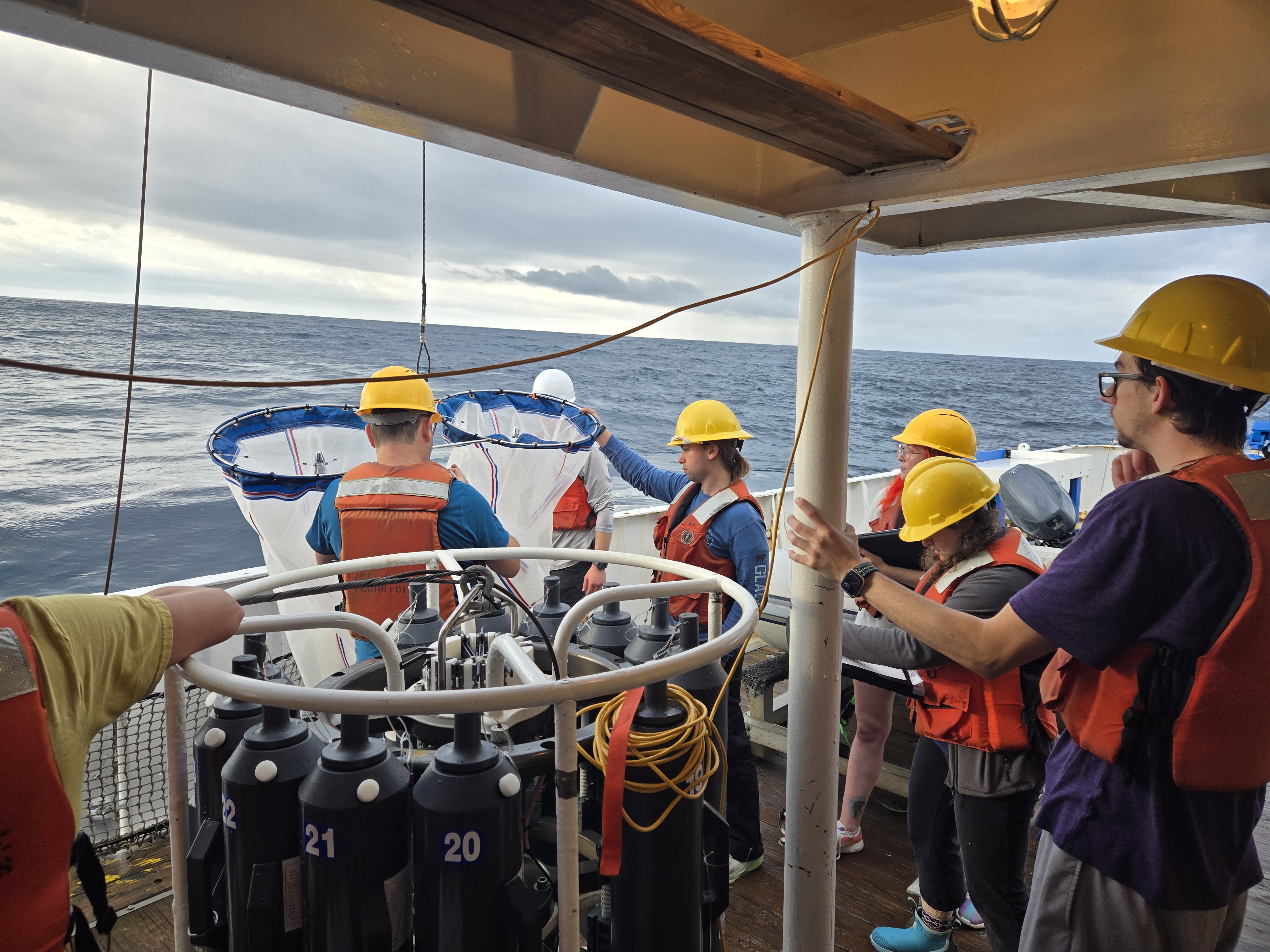
Many firsts for me on this latest cruise. I had never sampled 1400 m water, nor sailed to the other side of the Gulf Stream, nor deployed a mooring in 250 m of water. What a great time out on the open seas with all of our enthusiastic and ever-ready TEAL-SHIPS 2 participants. Thank you for making this cruise a memorable one!
Overlapping boundary layers publication

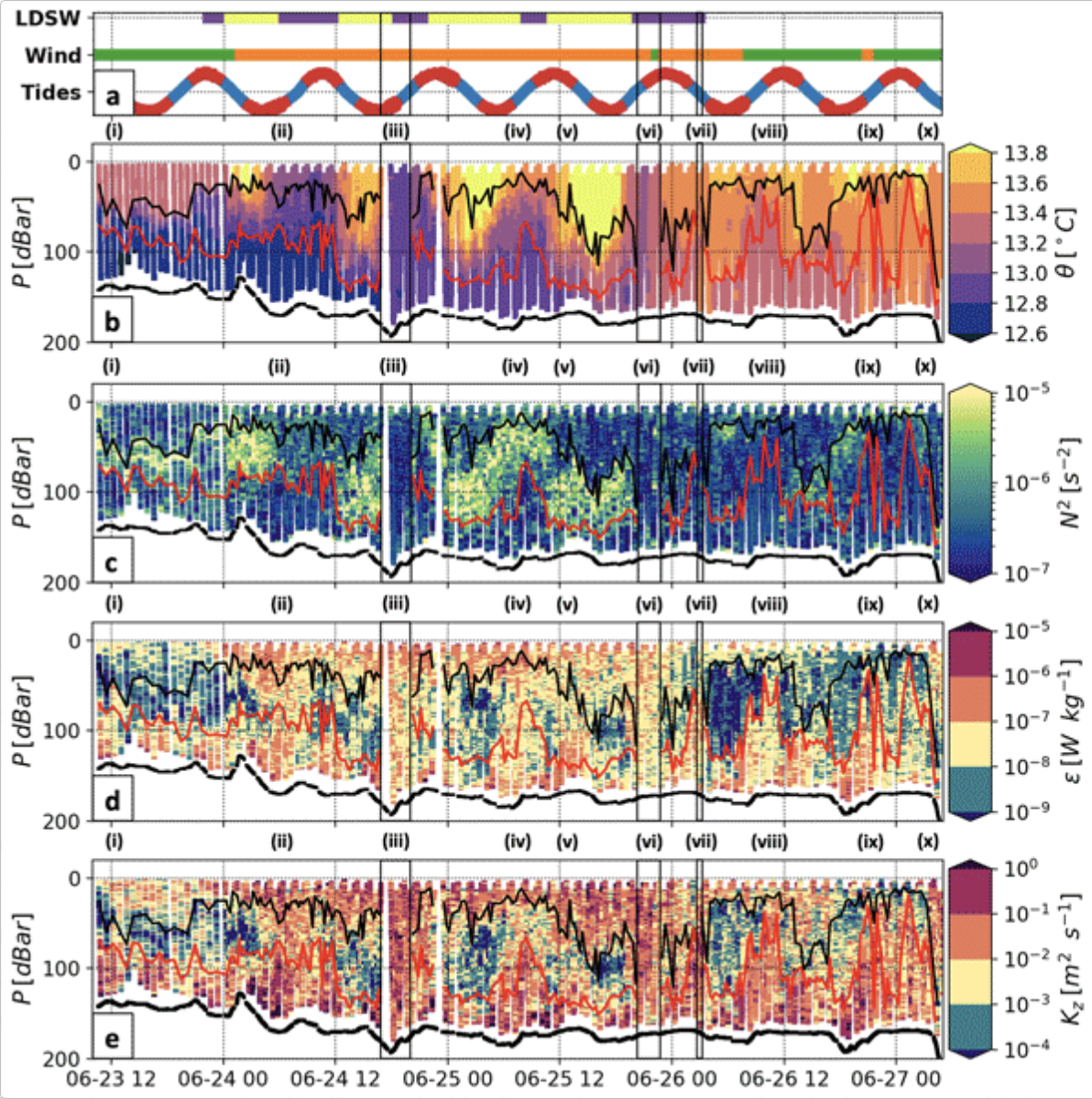
Congratulations to Dr. Arnaud Valcarcel on his publication in Ocean Science! Although Cook Strait, NZ is deep (~ 200 m), turbulent boundary layers can connect if the forcing is strong enough. Arnaud’s study used a turbulence package-attached autonomous glider to “fly” through some pretty strong wind and tidal flow conditions. Combined with a weakly stratified interior, this paper identifies some conditions where boundary interaction occurs. Check it out!

New ROXSI publications!

Two papers published with observational analyses from our rocky shorelines project. Led by Olavo Marques and Kaden Quinn, these papers document how a rocky sea bed increases the frictional environment encountered by waves as they approach the shore. Relative to a sandy bottom beach, the rocks also reduce the amount of wave energy available within the surf and the strength of nearshore wind and tidal-driven currents.

Links to these papers here and here! While we are at it, here is a call back to beautiful Asilomar State Park in Monterey, CA, where some of these data were collected.

New paper on eddy-driven exchange

Rafa Santana’s paper on submesoscale eddy transport in the East Auckland Current is now out in JGR: Oceans! Eddies of this intermediate scale are found in many boundary current regions. In this work, Rafa was interested in how this scale of eddy traps coastal fluid and exchanges it with the shelfbreak and offshore regions. He also used numerical experiments with and without data-assimilation to show comparable statistics in these small eddies. Although it is common practice to assimilate mesoscale fields, submesoscale activity grows intrinsically in our equations of motion. It is somewhat comforting to know that the “nudging” by large scale data assimilation does not affect the statistics of these features.

ROXSI St. Thomas recovery

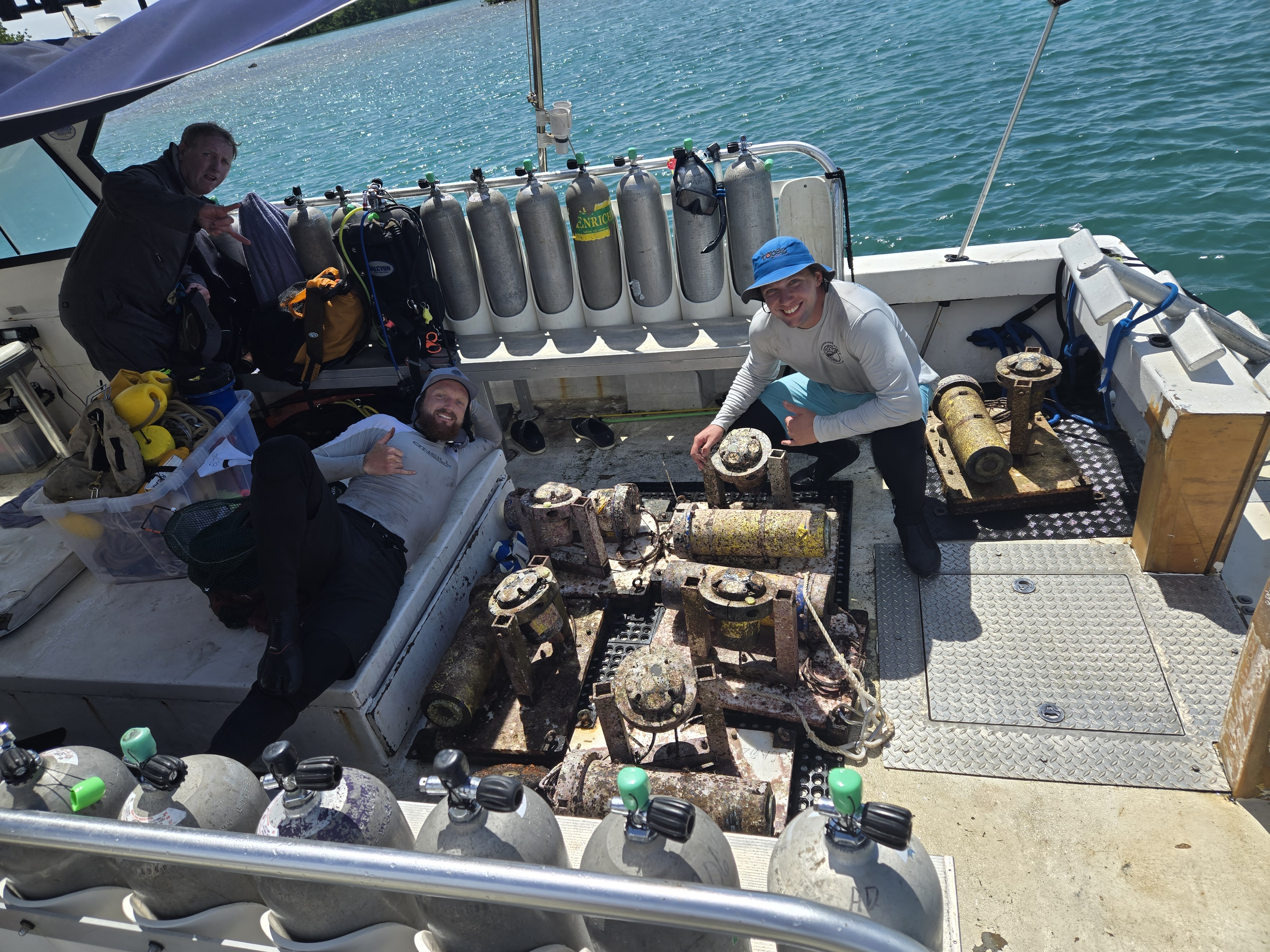
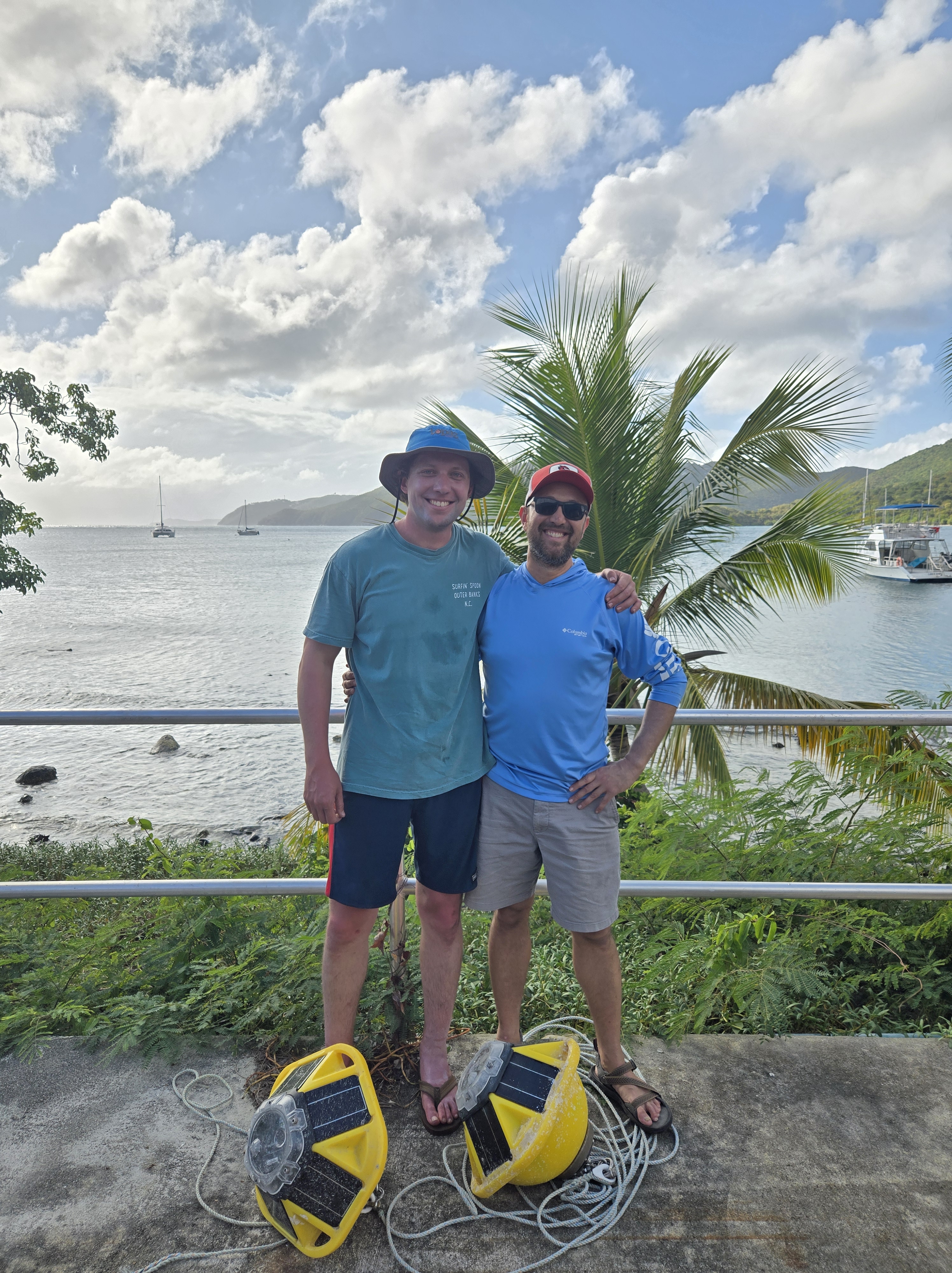
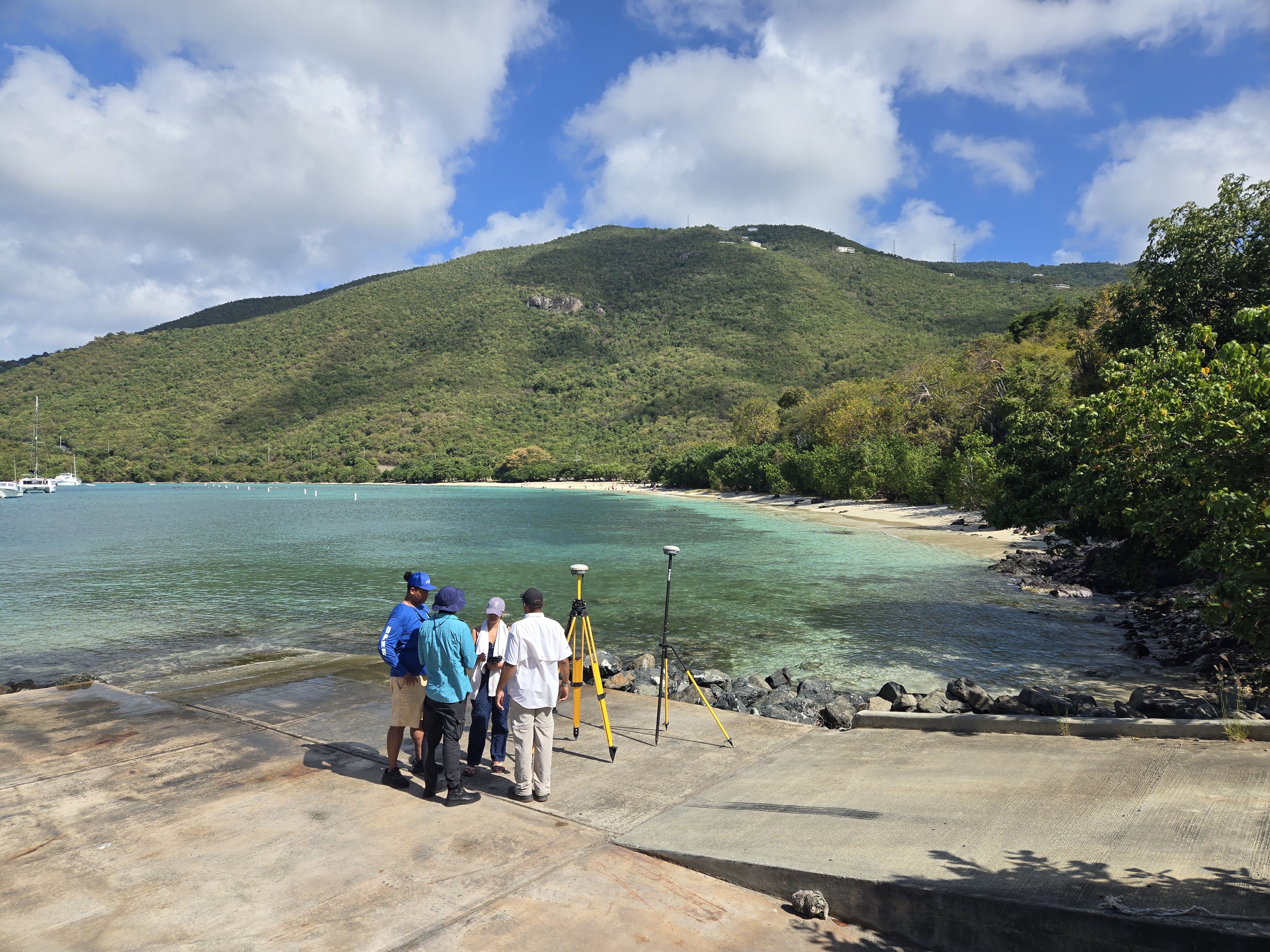
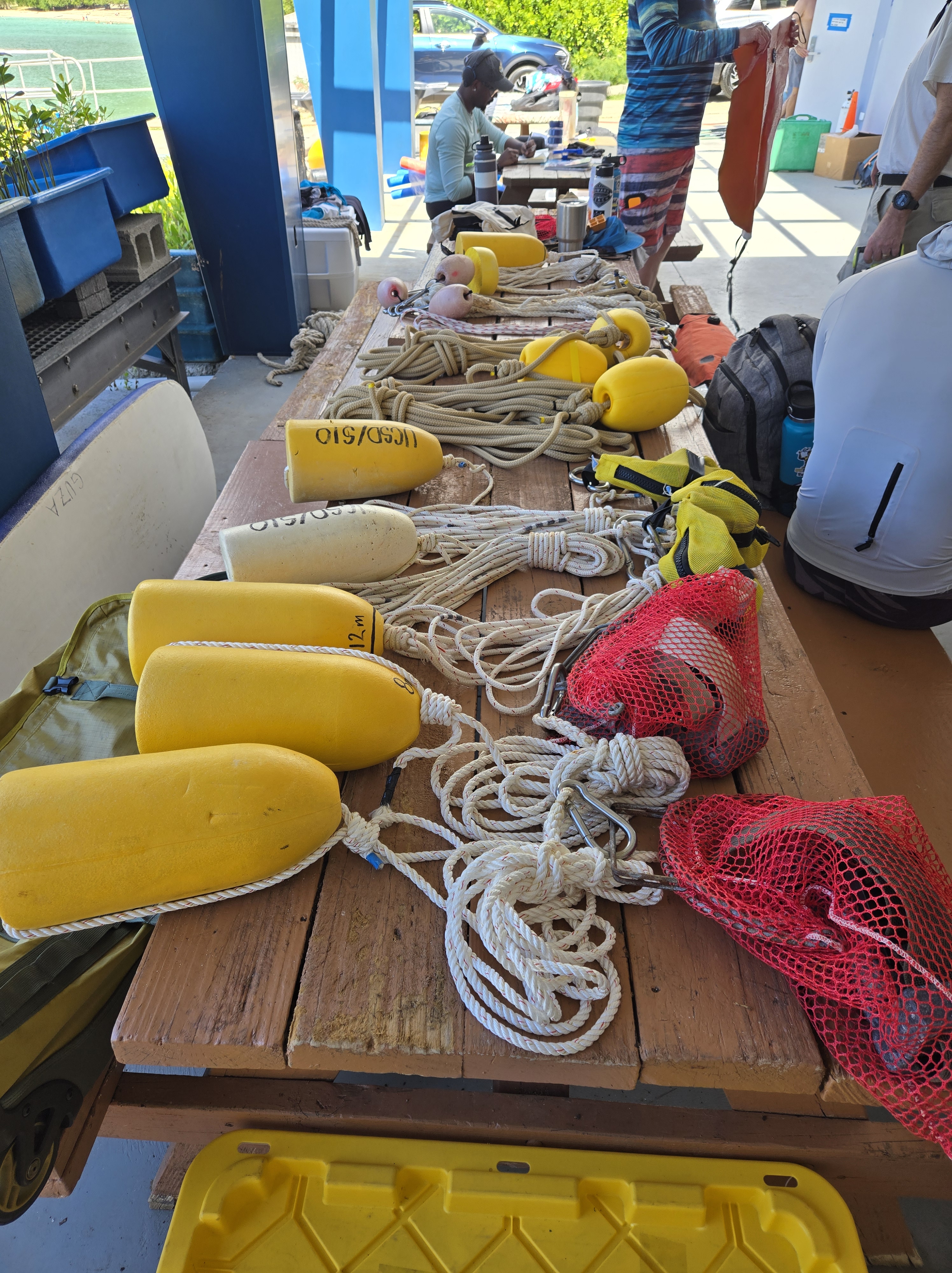
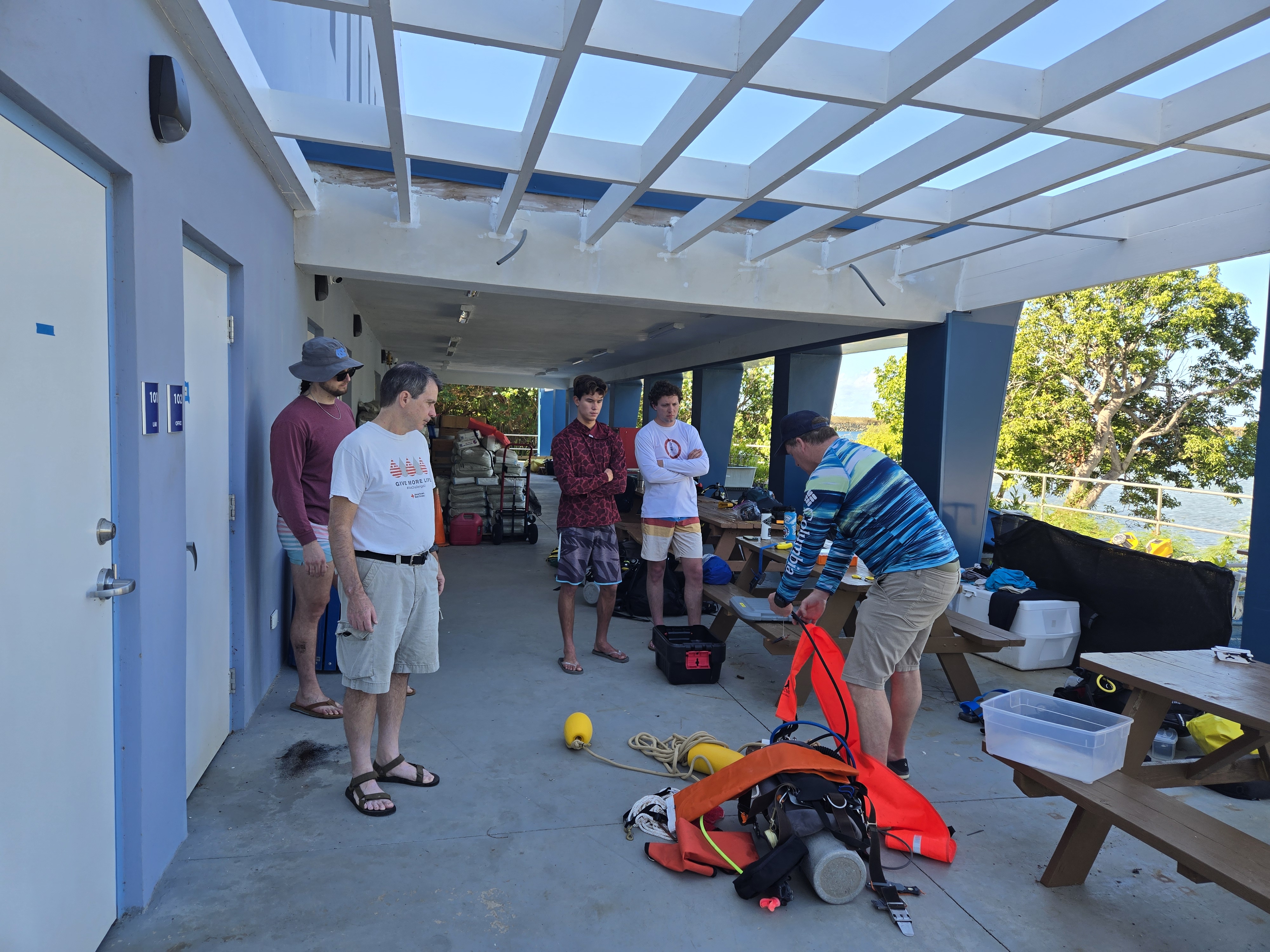
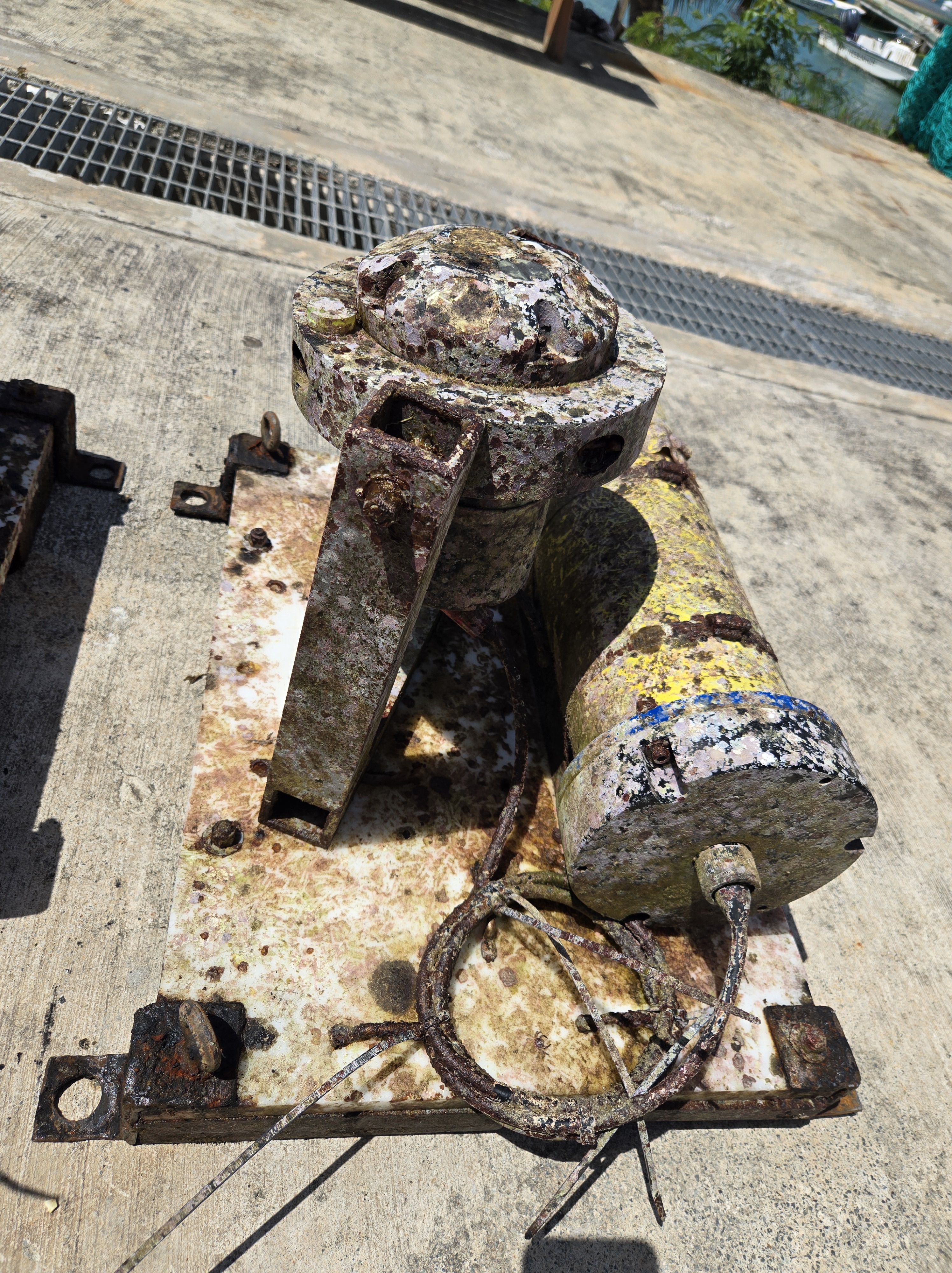
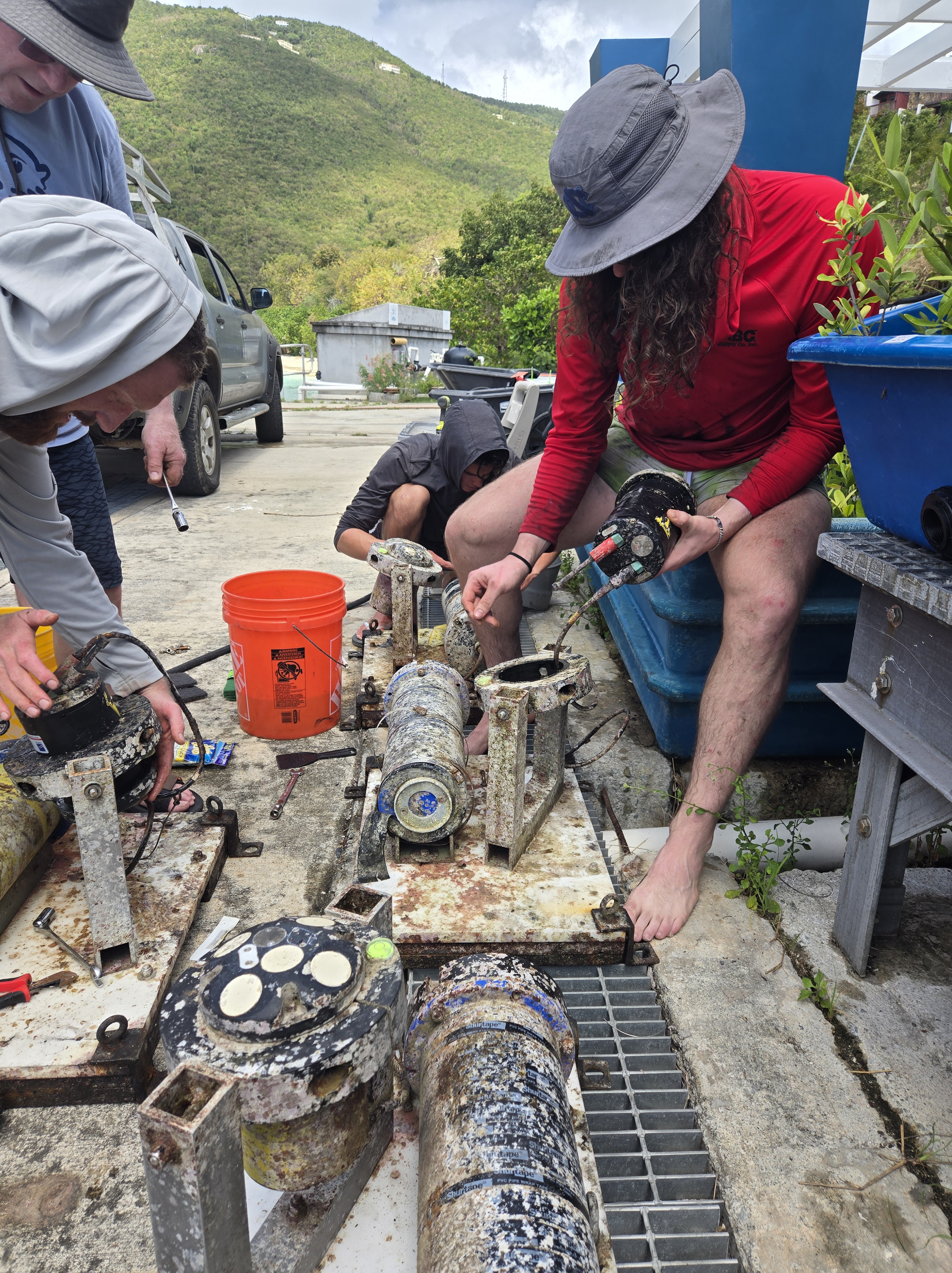
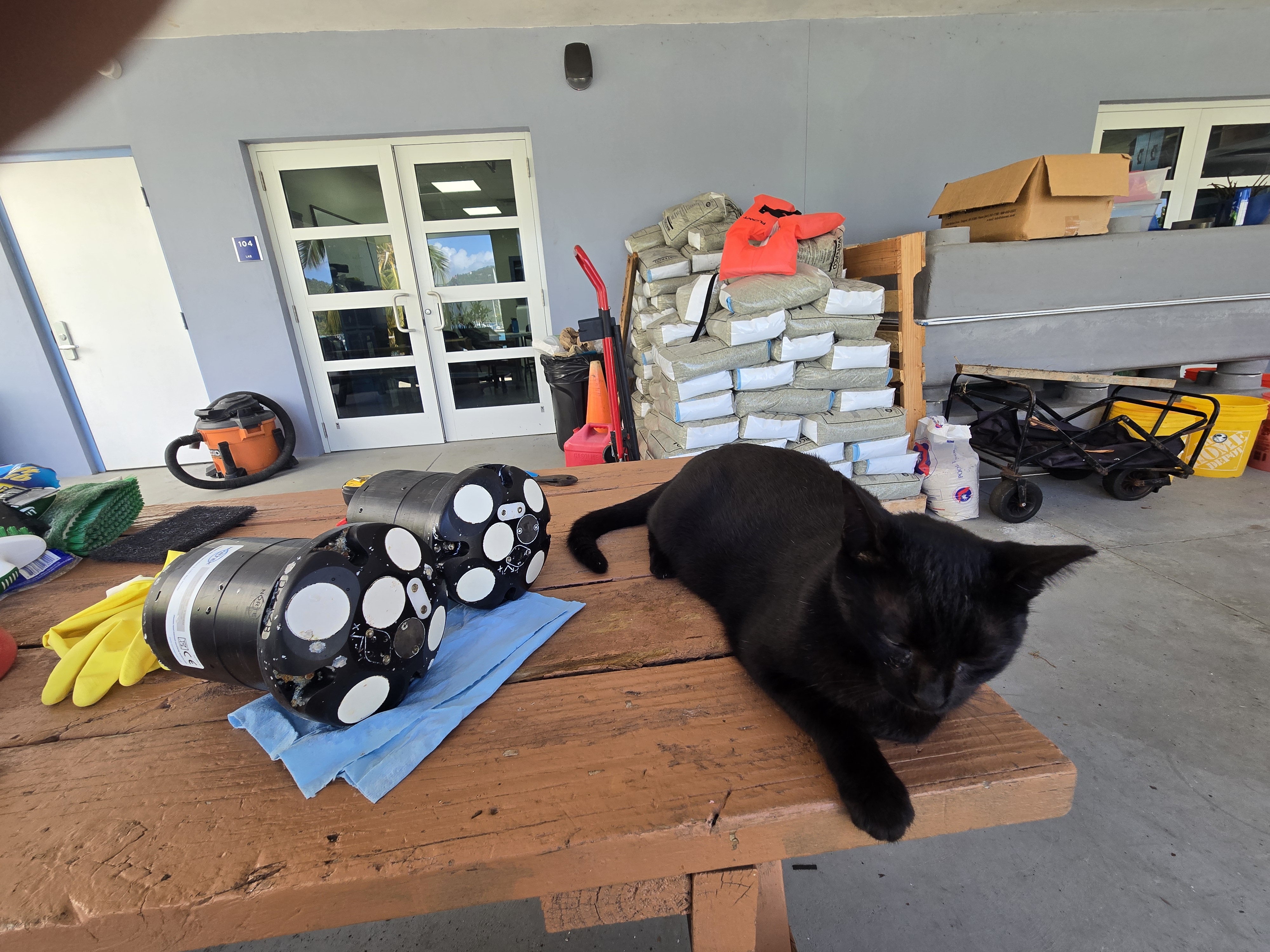
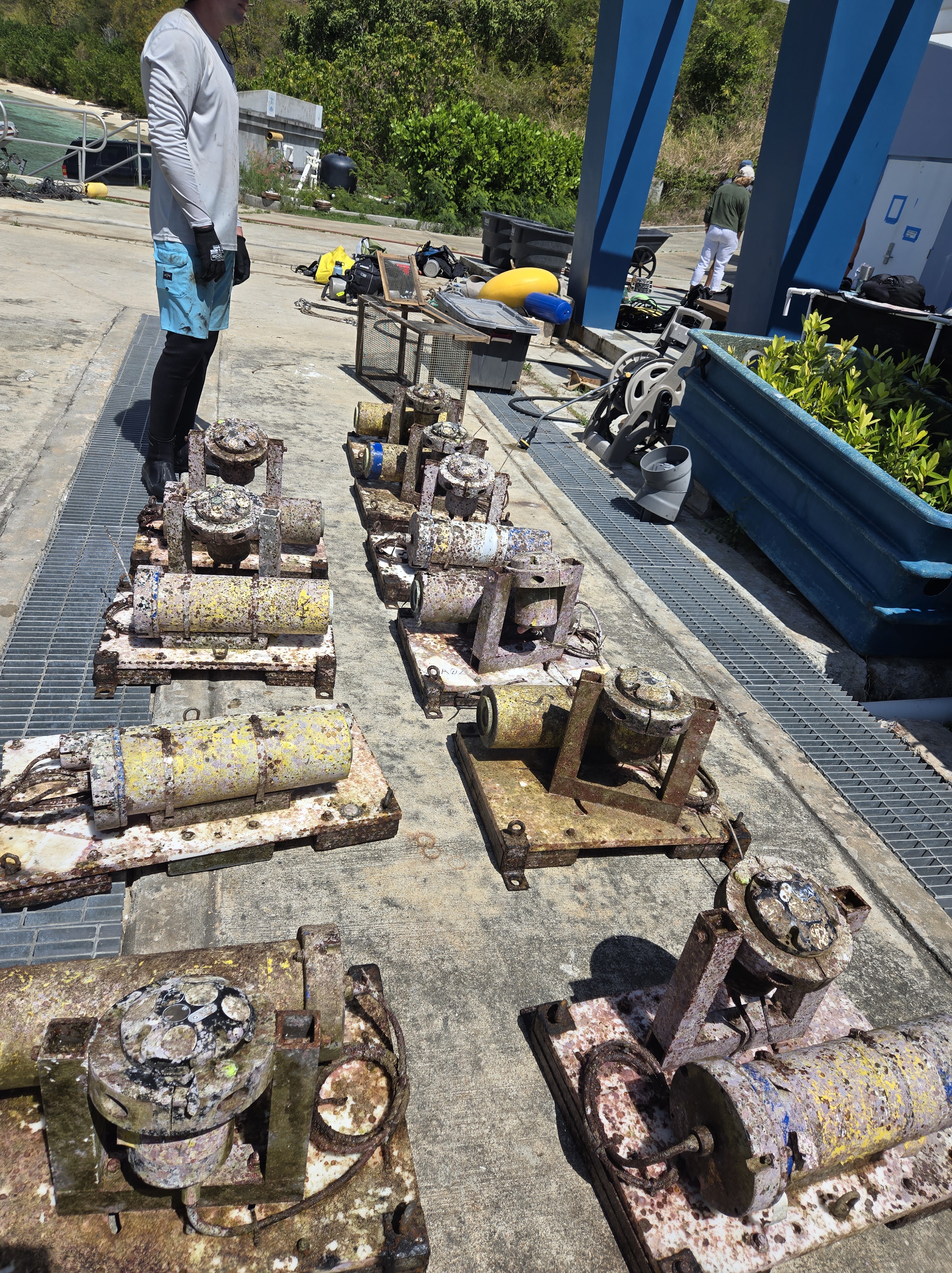
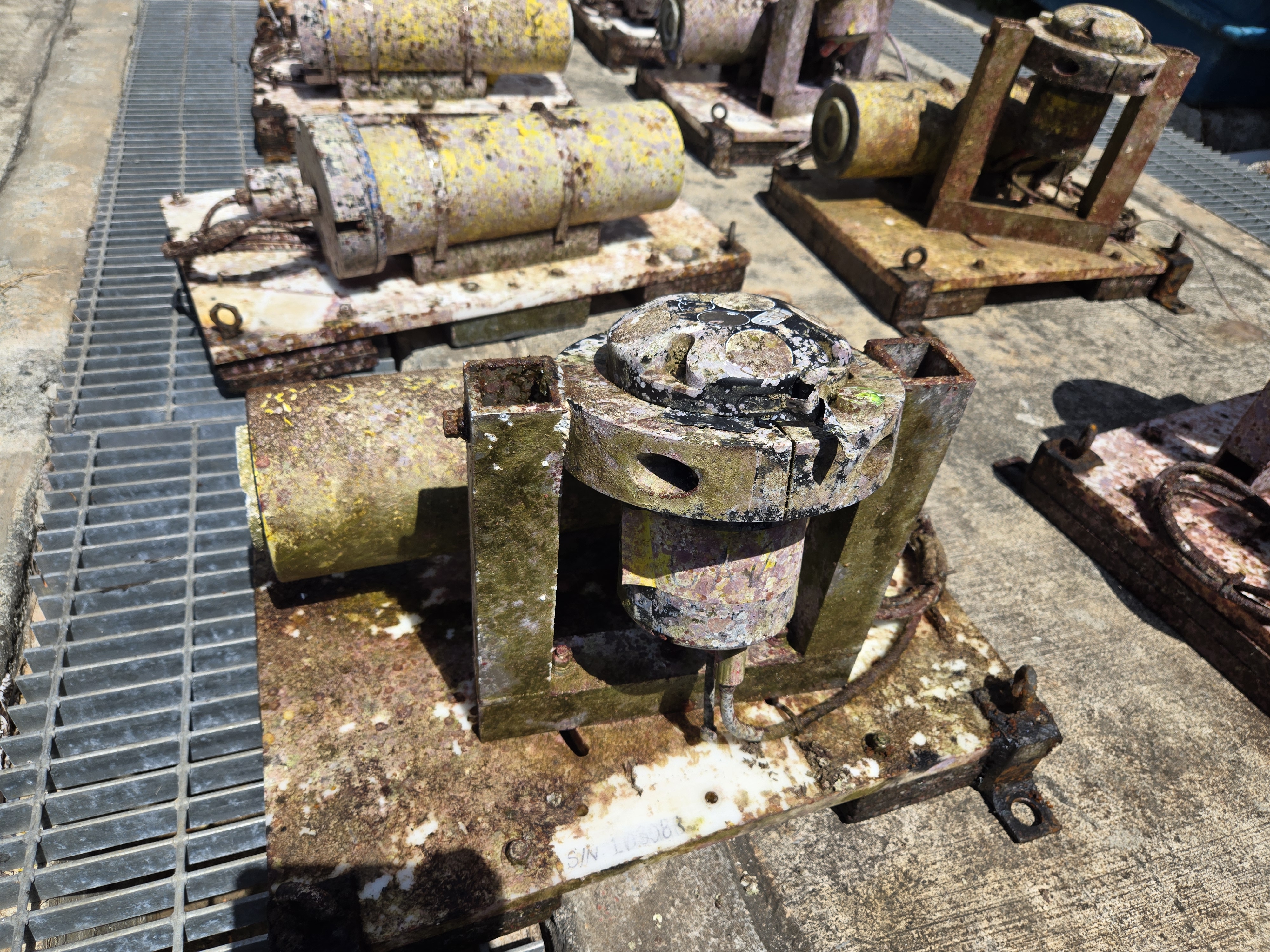
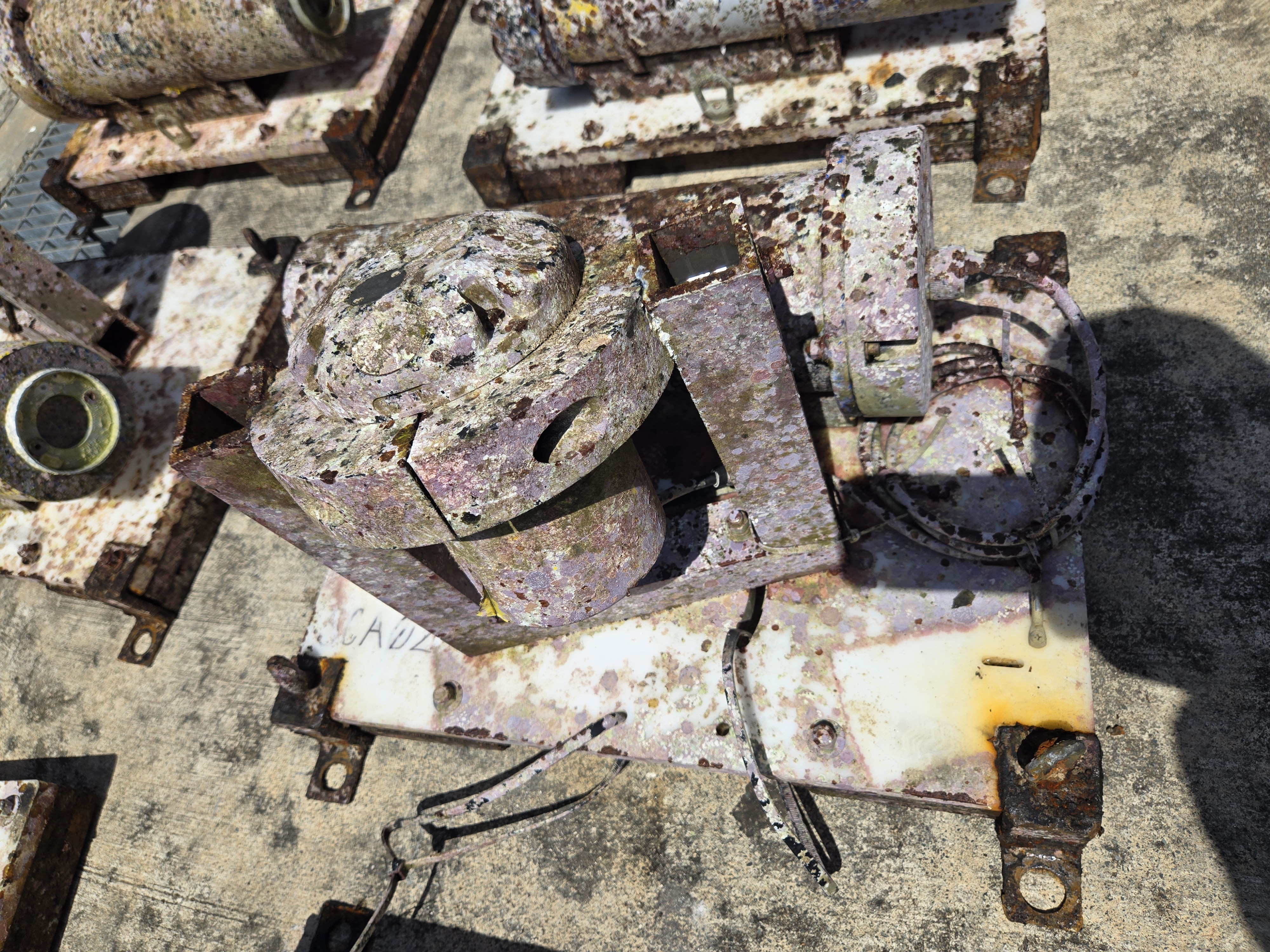
The 3 month experiment on the north shore of St. Thomas approaches completion. As usual, the field team kicked butt diving to recover instruments on and in between rocks, cliffs, crevices, nooks and crannies. Having pulled instruments from the coastal ocean of many places, I cannot get over how different this Caribbean bio-fouling looks. None of this is rust! As an added bonus, how fun to run into old friends and students. Shout out to Dr. Greg Guannel, Director of Caribbean Green Technology Center at UVI (Go Beavs!) and Drew Davey, PhD student at SIO (Go Hawks!)

TEAL-SHIPS 1 in the books

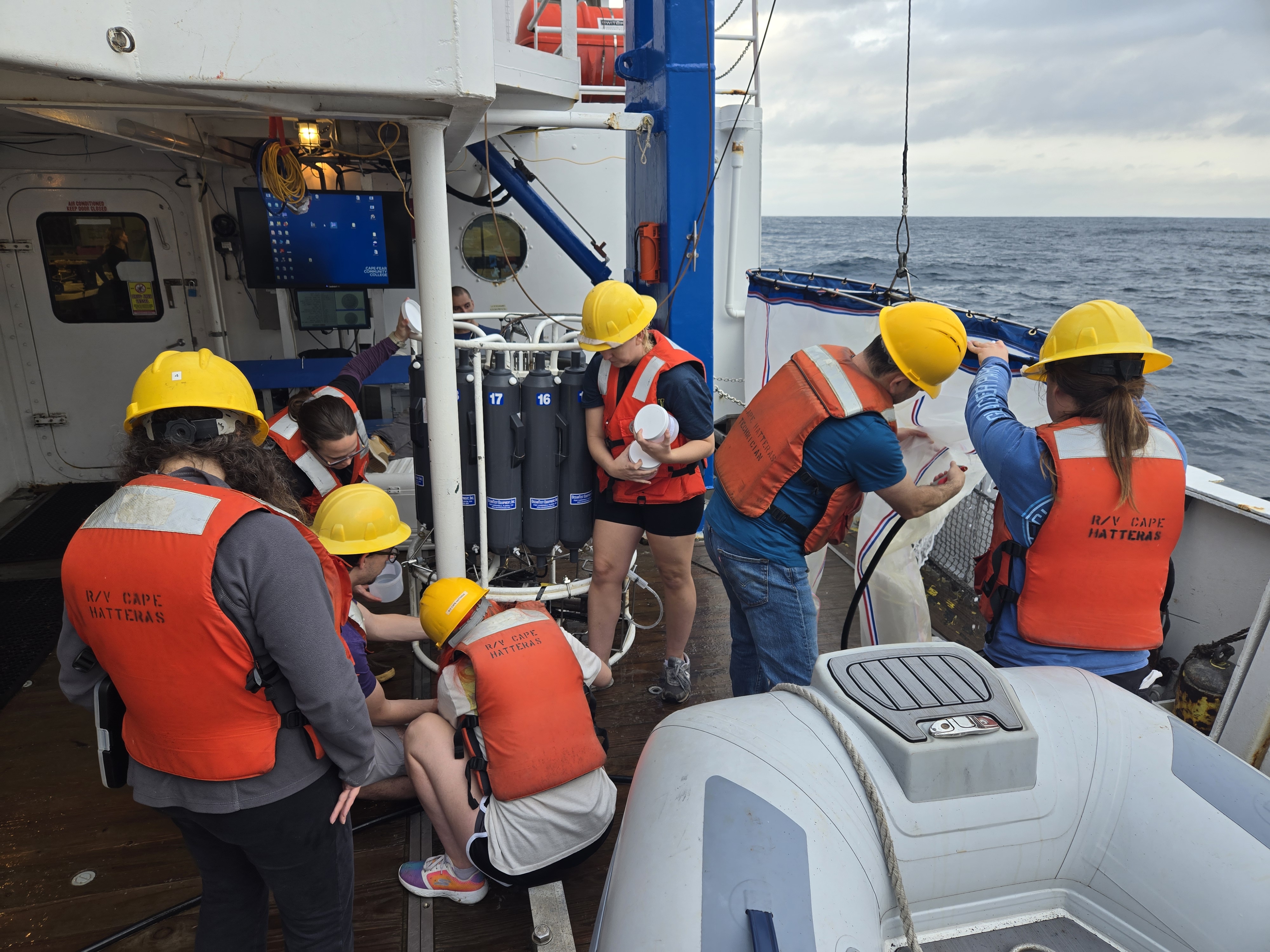
We have just completed our first cruise from the mouth of the Cape Fear into the Gulf Stream region. We went from winter to summer and back to winter again all in 3 days. HUGE thanks to the Captain and crew of RV Cape Hatteras for the expert navigation and deck work to get us out there and back all safe and sound. I have also never participated in such an interdisciplinary cruise. I learned so much from my colleagues, collaborators and students! Niskin bottles rinsed and ready for the next one.

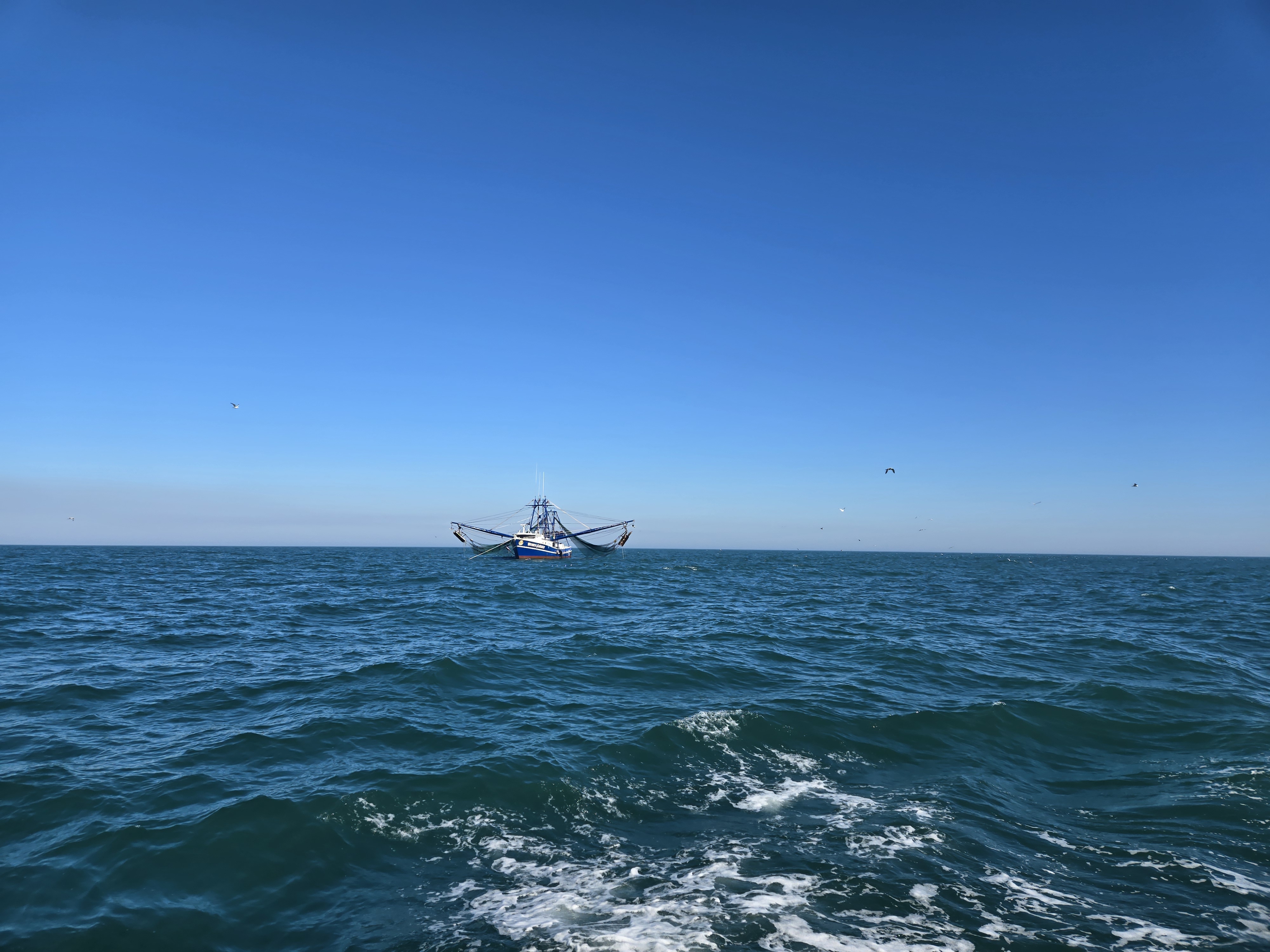
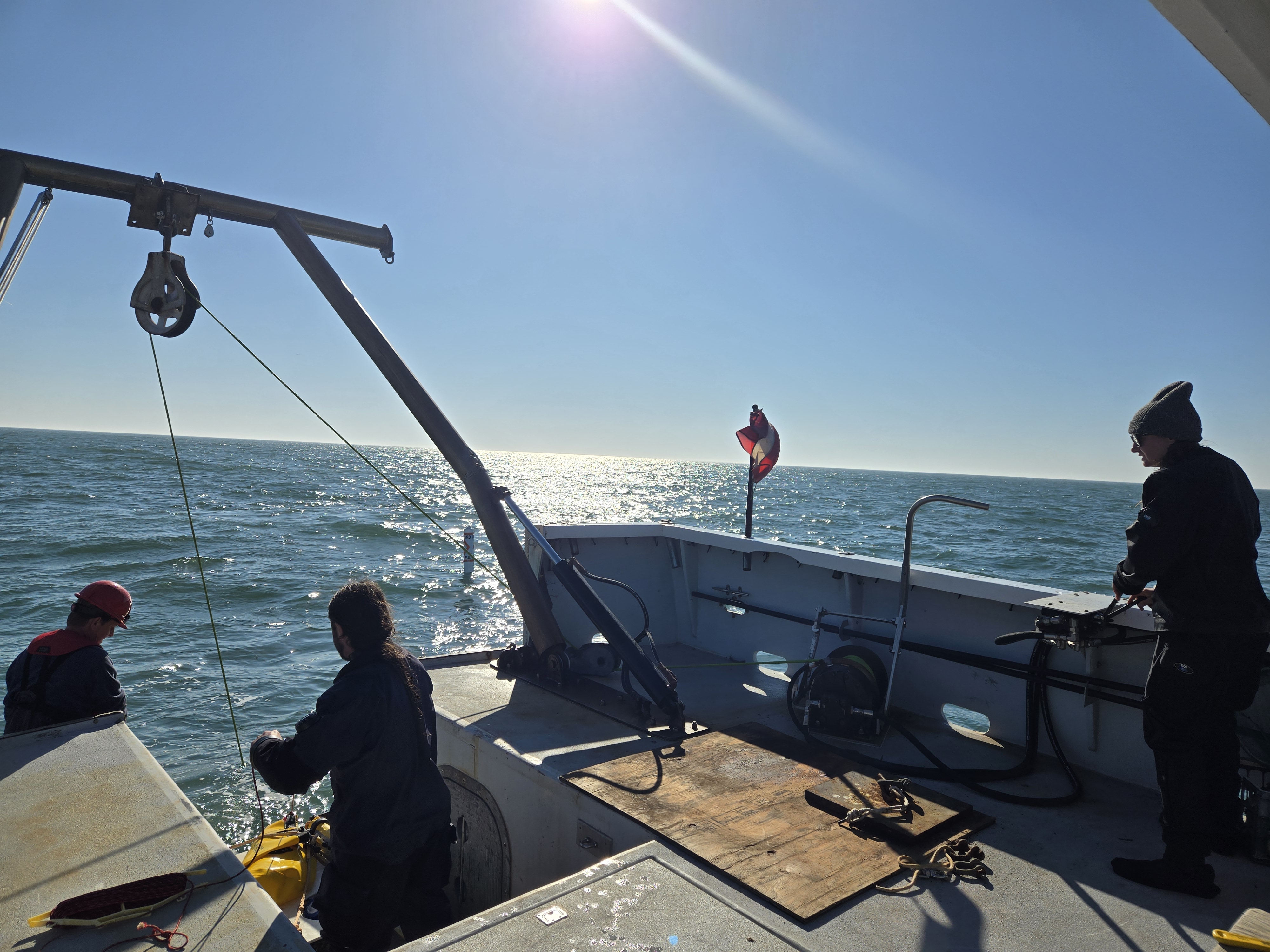
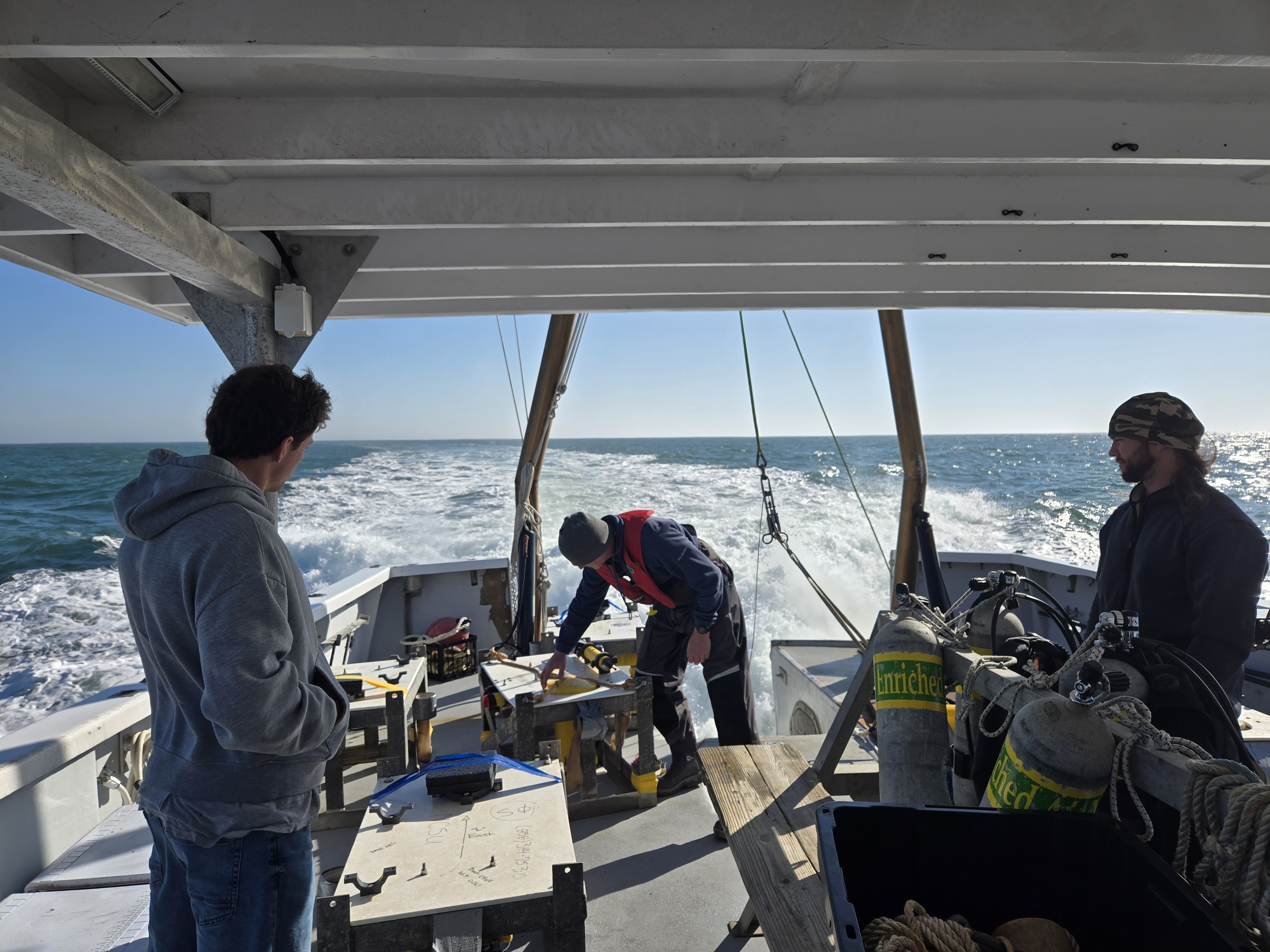
Fish Fry 6 deployed!

A full day of work on the water yesterday as we deployed our array for the 6th installment of our project around Frying Pan Shoals (5 landers, 2 wave buoys). As always, I am incredibly grateful to our team of technicians and divers to get these landers off the boat and into the water! Special shout-out to sister vessel RV Seahawk who were concurrently sampling the stations. Note, the shrimp trawler is NOT RV Seahawk.